25+ Cut Flower Garden Ideas

Looking to grow your own flowers but not sure how to design a cut flower garden that actually works?
Cut flower gardens can feel harder to plan than they seem. It is not just about planting pretty blooms. You need to think about spacing, bloom times, and how to keep flowers coming throughout the season. Without a clear setup, the garden can look messy or stop producing sooner than expected.
With a thoughtful layout, a cut flower garden can be both productive and visually organized. Grouping flowers by height, planning for continuous blooms, and leaving space for easy cutting can make a big difference in how the garden looks and performs.
There are many ways to approach it depending on your space, climate, and style. Some gardens focus on structure and rows, while others lean into a more natural, layered look.
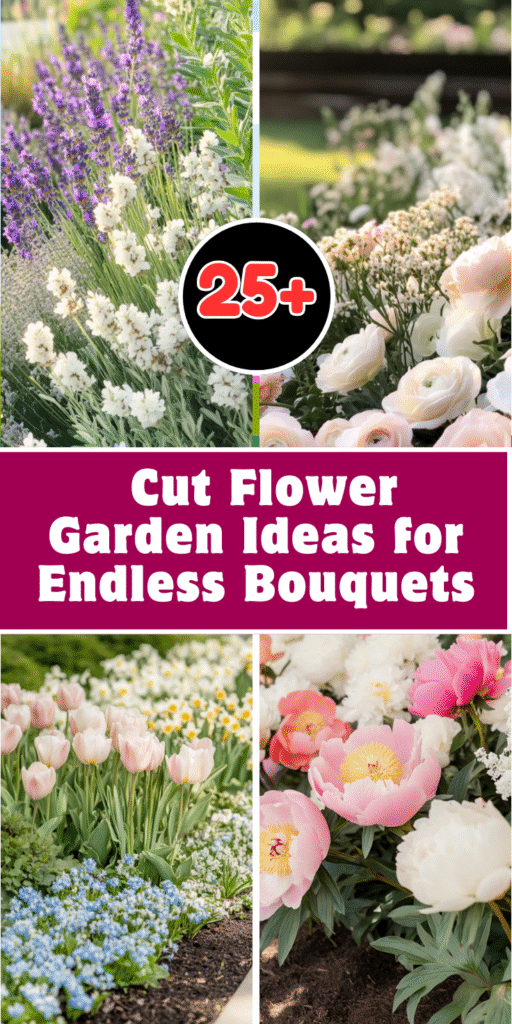
These 25+ Cut Flower Garden Ideas show how to create a space that is both beautiful to grow and practical for harvesting.
Romantic White and Blush Ranunculus
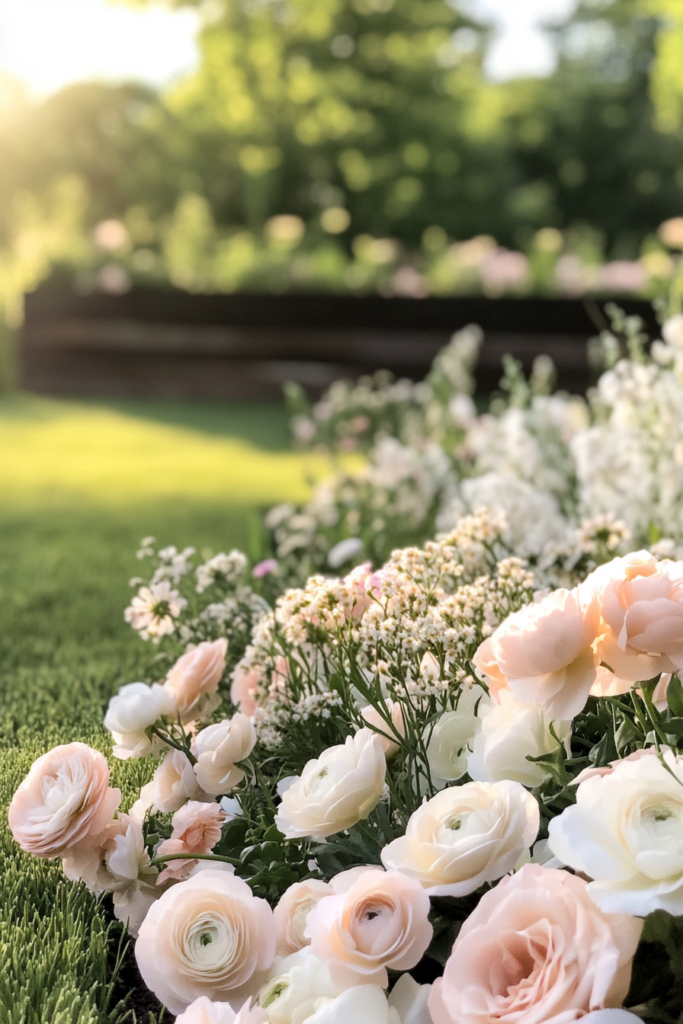
This enchanting image captures a cluster of white and pale blush-pink ranunculus flowers nestled at the edge of a neat green lawn, bathed in soft golden-hour sunlight. The delicate layers of the petals create a plush, dreamy texture, set against the backdrop of a slightly raised wooden bed and blurred greenery.
The design is brilliant because of the low, mounding habit of the ranunculus, which offers a beautiful, soft edge to the garden bed while maximizing the visibility of its intricate blooms. The light pastel colors feel instantly soothing and incredibly elegant, making these flowers the perfect starting point for a delicate, monochromatic bouquet.
It creates a mood that is utterly romantic and peaceful, like a gentle, slow morning just waiting for a cottagecore picnic. The soft light catching the petals adds an almost ethereal glow, making the space feel magical.
To recreate this at home, focus on layering low-growing, double-petaled flowers near the front border, perhaps mixed with a bit of frothy baby’s breath for that airy, romantic filler.
Beautiful Garden Styles To Explore First
• Flower Garden Ideas
• Front Garden Ideas
• Forest Garden Ideas
• Garden Container Ideas
Layered Lavender and White Sage
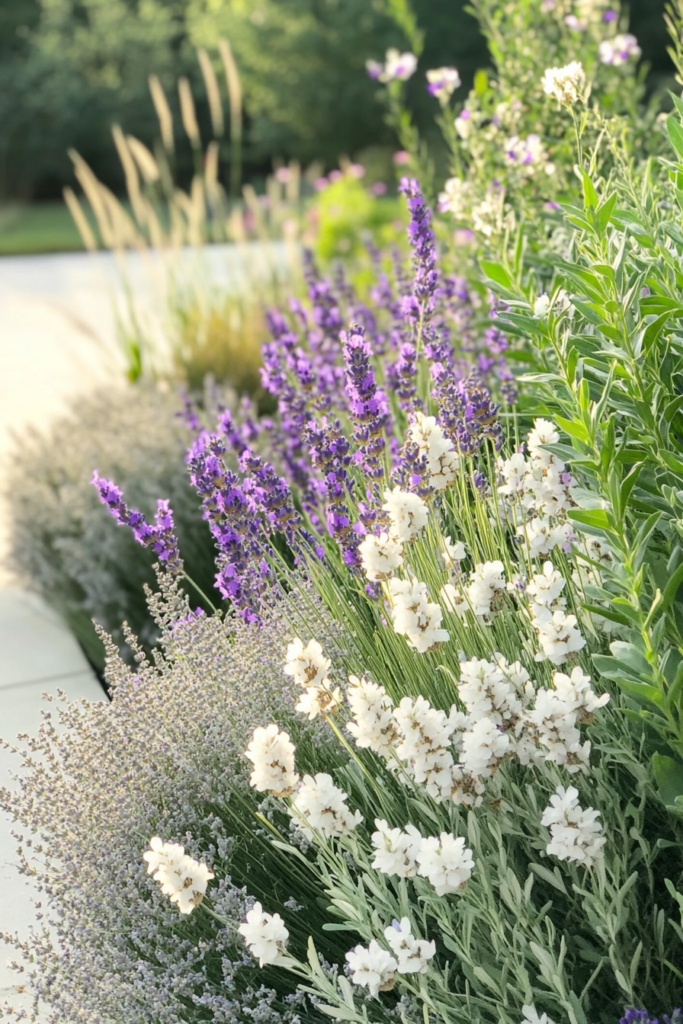
Here we see a striking combination of tall, vibrant purple lavender spikes planted alongside mounding clumps of white-flowering sage and the silvery foliage of what looks like lambs’ ears or a similar dusty miller. The composition is structured yet relaxed, with different heights adding lovely dimension.
This garden works so well because it uses contrast in both color (the deep purple against the cool white and silver) and texture (the spiky lavender next to the fluffy, soft blooms). The overall effect is incredibly calming and sophisticated, drawing heavily on classic Mediterranean garden aesthetics.
The energy this creates is one of pure relaxation and herbal tranquility, almost like a French countryside retreat. You can practically smell the calming scent of the lavender warming in the sun.
Try pairing contrasting cool colors like deep violet and white, ensuring you include some silver or blue-green foliage for an anchor point that keeps the design feeling fresh.
Showstopping Blush and Hot Pink Peonies
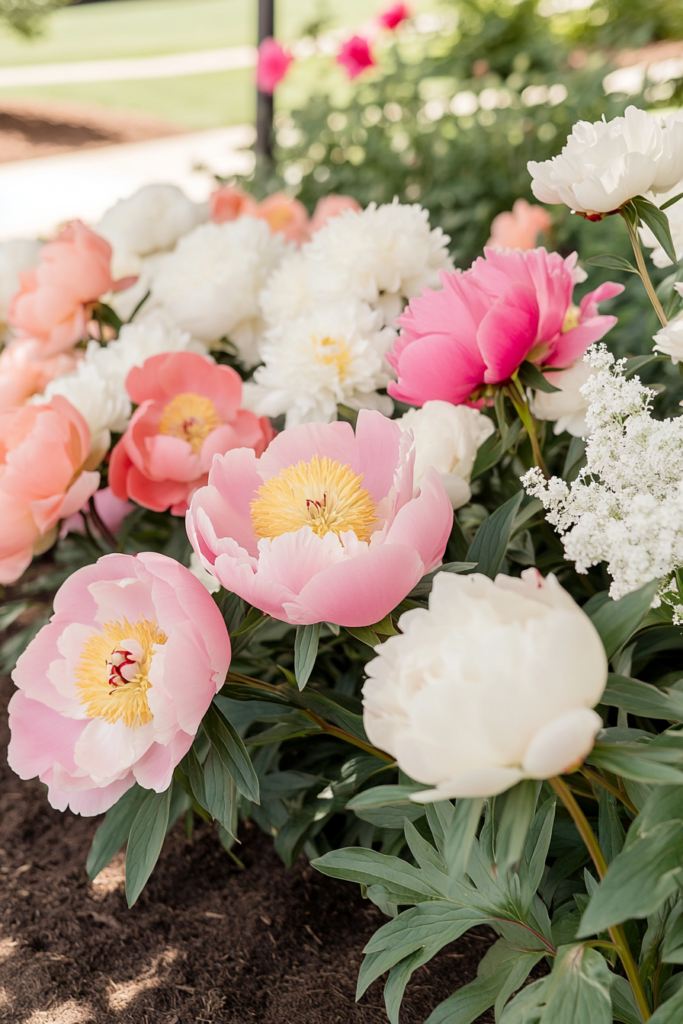
This close-up features luxurious, multi-petaled peony blooms in a striking palette of coral-pink, light blush, and crisp white, with one prominent single-petaled bloom showing off its vibrant yellow center. They are planted densely in rich, dark soil, surrounded by deep green foliage.
The appeal of this grouping is its bold use of a single flower type to create a lavish, impactful display, relying on the subtle variation in pink tones to add complexity. The sheer size and fluffy nature of the peony heads instantly command attention, signaling abundance and classic beauty.
It evokes a celebratory and joyful feeling, like a garden designed specifically for a lavish wedding or a vibrant spring fête. It has a rich, velvety mood that feels both traditional and incredibly indulgent.
If you want this look, focus on planting multiple peony varieties that bloom around the same time and in complementary colors, giving them plenty of space and rich soil for big, beautiful blooms.
Rich Jewel-Tone Dahlia and Cornflower Border
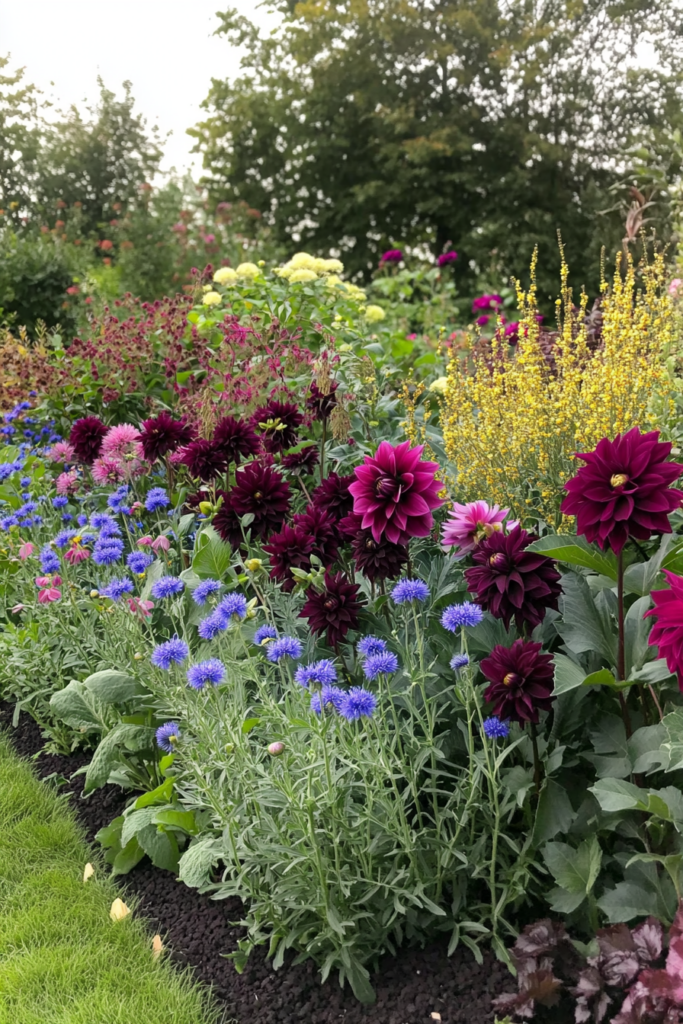
This lush planting bed is bursting with deep, rich jewel tones, featuring large, dramatic dahlias in a dark magenta or deep plum, perfectly complemented by the bright, delicate blue of cornflowers. Slender stalks of feathery yellow flowers rise up in the background, adding vertical interest.
This combination is visually stunning because the vibrant blue acts as a powerful cool contrast to the warm, luxurious depth of the dahlias, making both colors pop intensely. The difference in flower shape—the large, round dahlias versus the spiky cornflowers—provides wonderful textural dynamism.
The mood here is sophisticated and intense, feeling like an old-world tapestry garden where color reigns supreme and the atmosphere is deeply dramatic. It has a beautiful, brooding elegance perfect for late summer.
To replicate this richness, don’t be afraid to pair a dark, warm bloom (like a burgundy dahlia or zinnia) with a clear, bright cool-toned flower like bachelor buttons or globe thistle.
White and Blue Forget-Me-Nots and Tulips
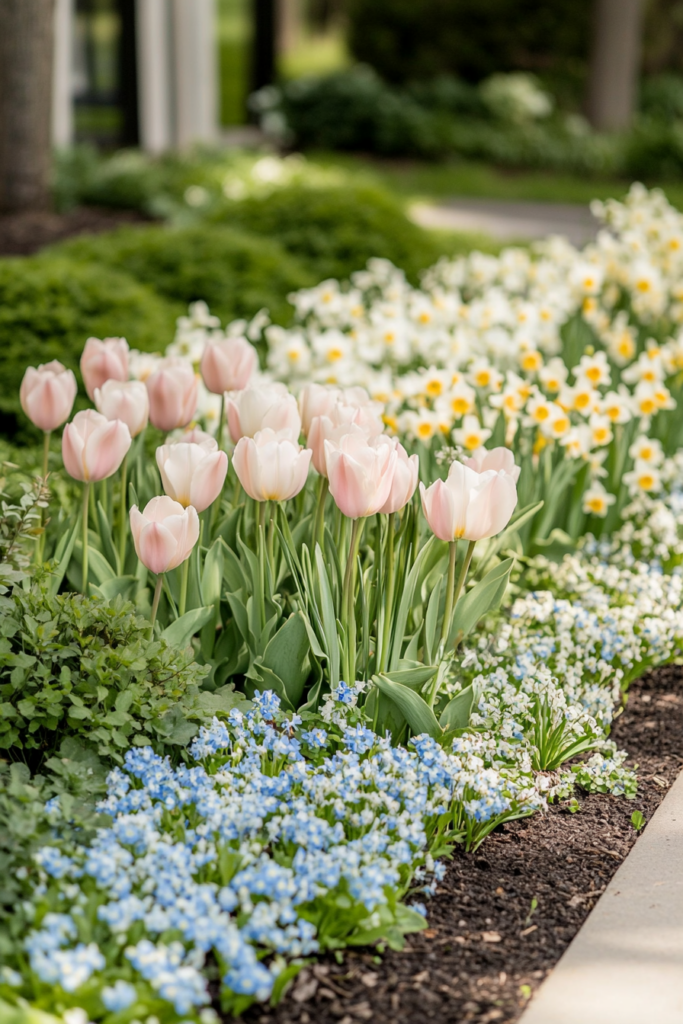
A beautiful spring border is captured here, showcasing pale pink tulips standing tall among a dense groundcover of tiny, bright blue forget-me-nots, interspersed with the cheerful yellow and white of narcissus or daffodils. The low plantings flow right up to the edge of a neat path.
The design is successful due to the perfect spring layering: low-level texture from the forget-me-nots, mid-level color from the daffodils, and height from the elegant tulips. The cool blue and soft pink create a timeless, gentle color palette that feels utterly fresh.
This look generates a feeling of innocent, hopeful spring—it’s light, airy, and utterly charming, reminiscent of a fairy garden just waking up for the season. It’s pure, uncomplicated joy.
For your own spring display, remember to combine bulbs (like tulips and daffodils) with annual groundcovers (like forget-me-nots) to get multiple layers of color and texture simultaneously.
Sunny Yellow and Orange Meadow Mix
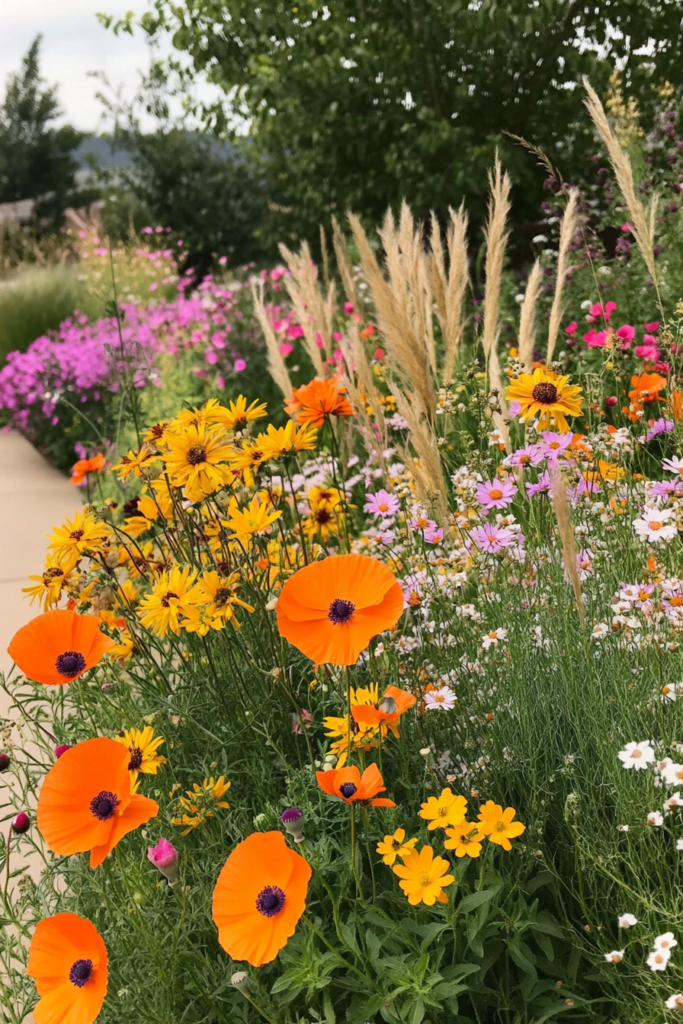
This cheerful border is a riot of warm colors, dominated by large, brilliant orange Icelandic poppies and masses of sunny yellow coreopsis and black-eyed Susans, contrasted by tiny white and pink filler daisies. Tall, feathery wheat-colored grasses add movement and softness in the background.
The visual impact is all about the generous use of warm, primary colors that instantly feel like sunshine and summer happiness. The mix of shapes, from the broad, cup-like poppies to the delicate daisies, prevents the strong color from feeling overwhelming.
It creates a mood that is absolutely exuberant and energetic, like a wildflower field bursting with life and humming with busy bees. This garden feels carefree and utterly abundant, perfect for a sunny day.
To achieve this natural meadow look, plant lots of bright-colored annuals and perennials closely together, making sure to include some airy grasses or filler flowers to soften the edges.
Pastel Pink and Cream Peonies and Stock
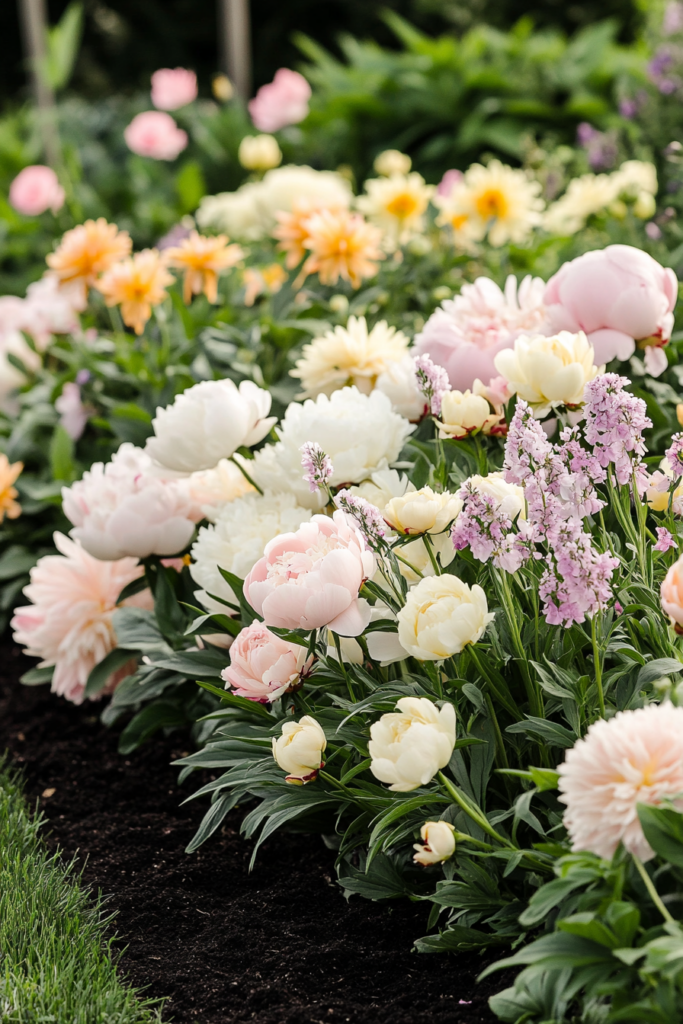
A gorgeous display of creamy white and softest blush-pink peonies, complemented by the delicate purple spikes of stock flowers, forms a low border against dark soil and a grassy edge. The peonies are in various stages of bloom, from tight buds to full, fluffy heads.
The arrangement shines because of its soft, almost watercolor-like color scheme, which feels incredibly cohesive and peaceful. The contrast between the large, round peony heads and the slender, vertical stock flowers adds necessary structural interest to the bed.
This scene conjures a gentle, elegant, and sophisticated mood—it’s the essence of a serene, high-end garden where every bloom looks hand-selected. The pastel colors keep the feeling light and airy.
When choosing cut flowers, always pair large focal flowers (like peonies or dahlias) with spiky, vertical accents (like foxglove or stock) to ensure your arrangements have height and drama.
Autumnal Zinnia and Sunflower Patch
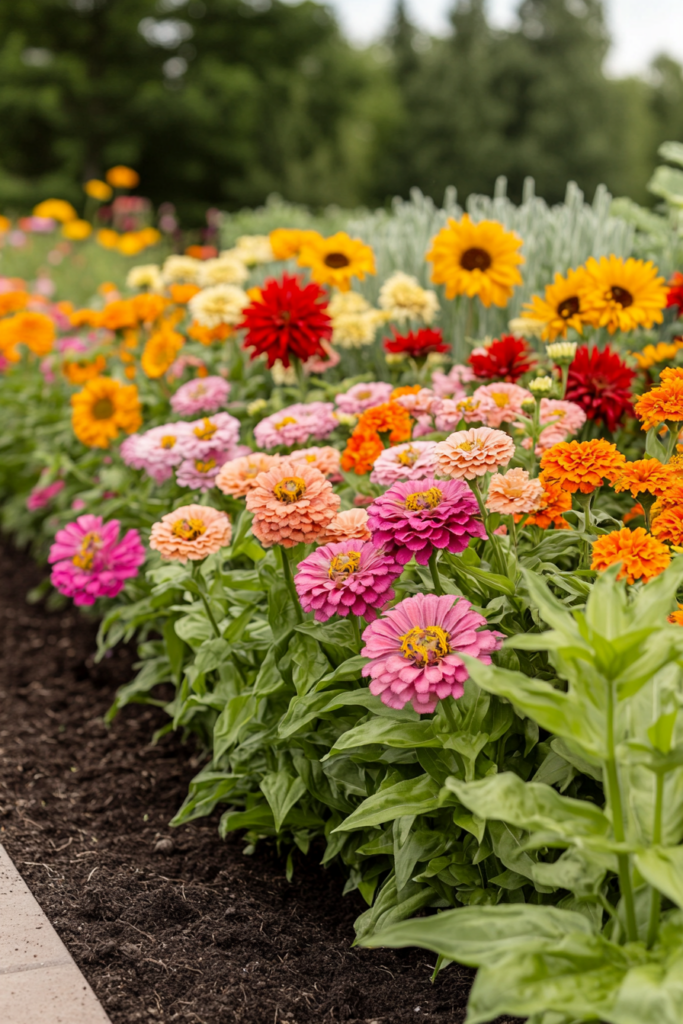
A vibrant, dense line of zinnias in shades of pink, salmon, coral, and deep red creates a stunning foreground, backed by bright yellow and orange sunflowers and calendula in the background. The deep green foliage creates a lush, grounding base for the jewel-toned blooms.
The design is powerful because it uses a controlled strip of intensely saturated, multi-hued flowers that transition beautifully into the taller, warm-toned blooms behind them. It captures the rich, fiery palette of late summer leading into fall.
The mood is one of rich, fiery warmth and high productivity. This garden looks like an endless source of happy, robust color, full of energy and ready to be harvested for big, bold bouquets.
For a similar effect, plant multiple colors of the same flower type (like zinnias or dahlias) in tightly packed rows to create a “ribbon” of color across your garden bed.
Deep Wine and Dusty Blue Dahlias
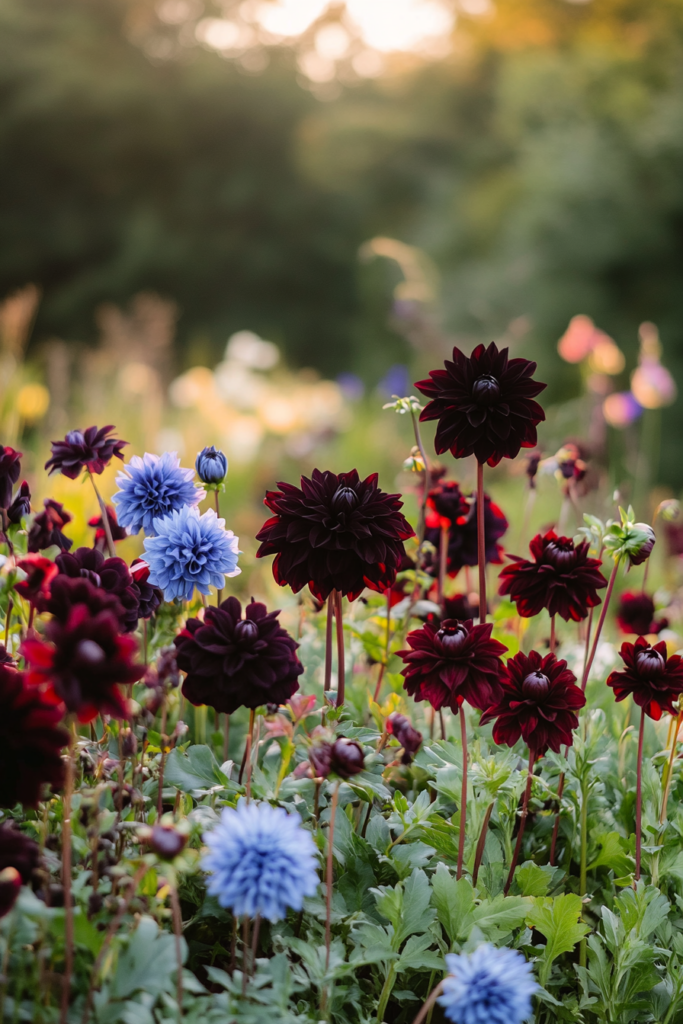
This evocative image features dramatic, near-black or deep maroon dahlias standing proudly amidst the softer, misty-blue pom-pom-shaped blooms of what appears to be a different dahlia variety or a similar flower like globe thistle. The backdrop is a lush, softly blurred green landscape.
The striking color contrast is what makes this so captivating; the intense, almost velvety dark dahlias are unexpectedly lifted by the dusty, cool blue, giving the arrangement immense depth and visual intrigue. It is a powerful masterclass in pairing opposites.
It creates a mood that is dramatic, mysterious, and deeply luxurious. This is a refined, statement-making garden that feels sophisticated and full of beautiful shadows and highlights.
A helpful tip for impactful color: always use at least one very dark flower or foliage element next to a very light or vibrant one to maximize the visual punch of both.
Creamy Zinnia and Ranunculus Medley
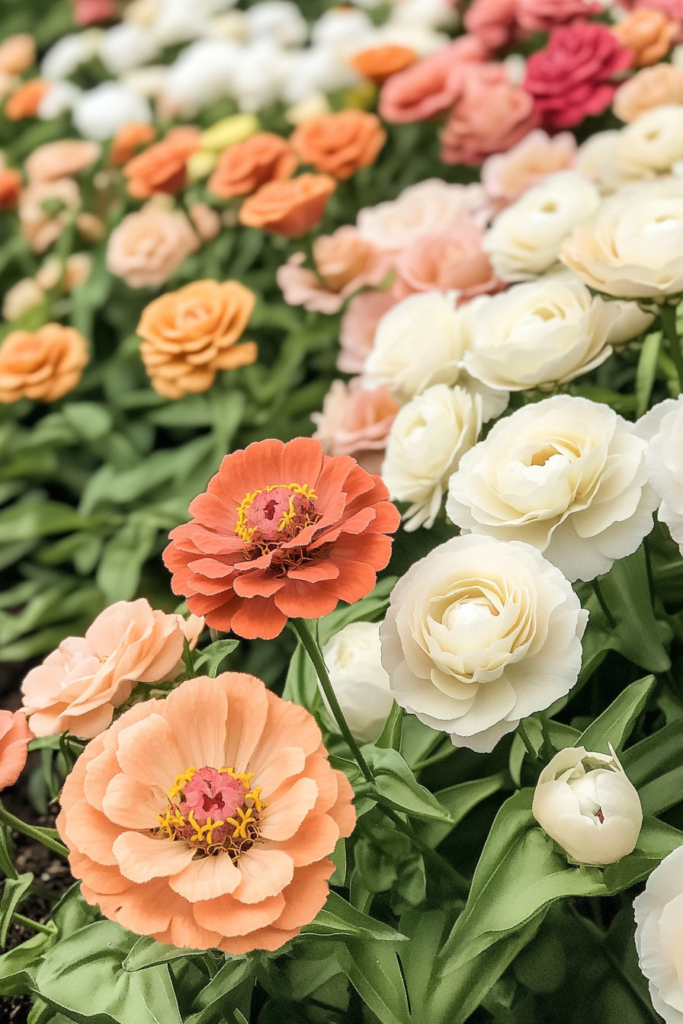
This gorgeous close-up focuses on a mix of flowers in warm, muted tones: a prominent orange-coral zinnia, softer peach-colored zinnias, and creamy white, multi-petaled ranunculus-style blooms. The dense planting creates a flowing river of subtle color variations.
The arrangement is beautiful because it plays with texture—the more open, layered look of the zinnias contrasts perfectly with the tightly scrolled, rose-like shape of the white blooms. The peach, coral, and cream palette is incredibly harmonious.
It evokes a feeling of vintage romance and soft, feminine charm, like a bouquet you’d carry in a beautiful, classic ceremony. The atmosphere is delicate and quietly joyful.
To make an arrangement feel cohesive, select flowers of different textures and shapes, but keep them within a very narrow, harmonious color range like this beautiful mix of creams and peaches.
Rich Earth-Toned Autumn Display
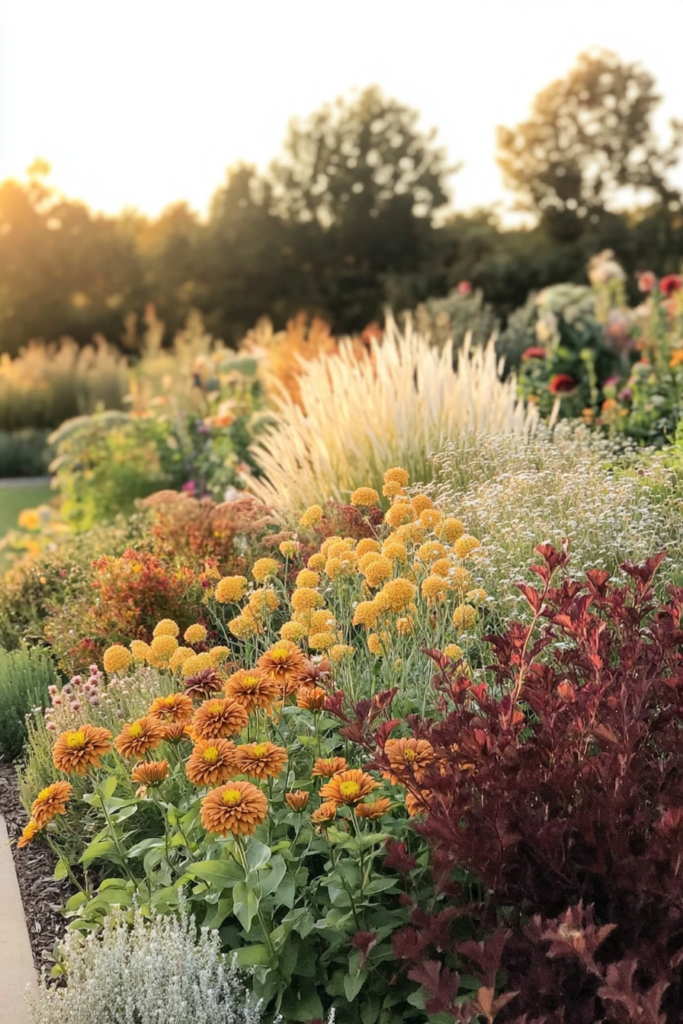
A beautiful autumn-toned border showcases a rich blend of orange zinnias, feathery gold ball flowers (like Craspedia), and deep, velvety reddish-brown foliage, accented by tall, fluffy wheat-colored grasses. The planting is dense and layered, giving it a wild, abundant feel.
This scene works brilliantly by focusing entirely on the warm spectrum—golds, oranges, and deep reds—to create a unified, rich, and textural statement. The fine texture of the ornamental grasses and baby’s breath-like flowers keeps the heavy colors from feeling flat.
It creates a cozy, mature, and enveloping mood, reminiscent of late harvest and cool, crisp air. It’s the perfect end-of-season, comforting garden vibe.
When designing for fall, lean into the textures of grasses and deep, complex foliage colors to amplify the beauty of your late-blooming oranges and golds.
Planning A Productive Flower Garden Setup
• Formal Garden Design
• Garden Border Ideas
• Front Garden Landscaping Ideas
• Garden Bench Ideas
Classic White Hydrangea and Rose Bed
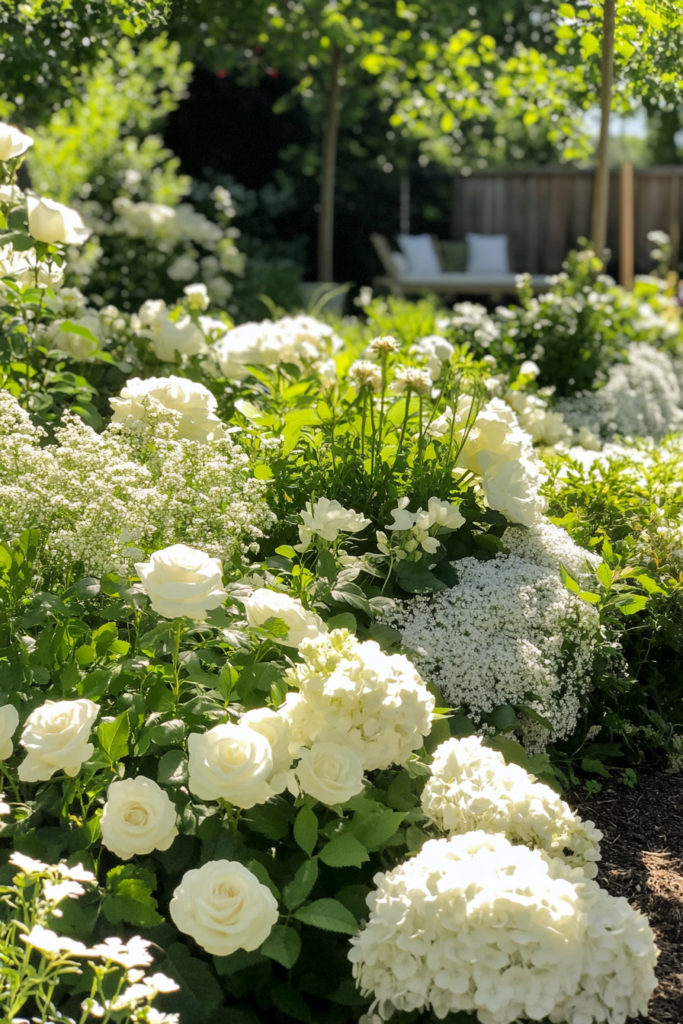
This lush, sun-dappled bed features an all-white planting scheme, with prominent white roses and large, rounded hydrangea clusters, softened by airy white filler flowers. The abundance of green foliage provides a fresh, vibrant contrast to the pure white blooms.
The genius of an all-white garden is its inherent elegance and ability to glow in low light, making it a powerful visual statement. The varied forms of the roses (individual blooms) and hydrangeas (clumps of tiny flowers) offer complex texture despite the single color.
It radiates a mood of serene purity, tranquility, and classic grace. It feels like a hidden, luxurious spot for quiet reflection on a warm afternoon.
If you commit to an all-white garden, be sure to use many different flower shapes and foliage colors to add contrast and prevent the space from feeling monotonous.
Airy Pastel Garden with Sun-Kissed Bokeh
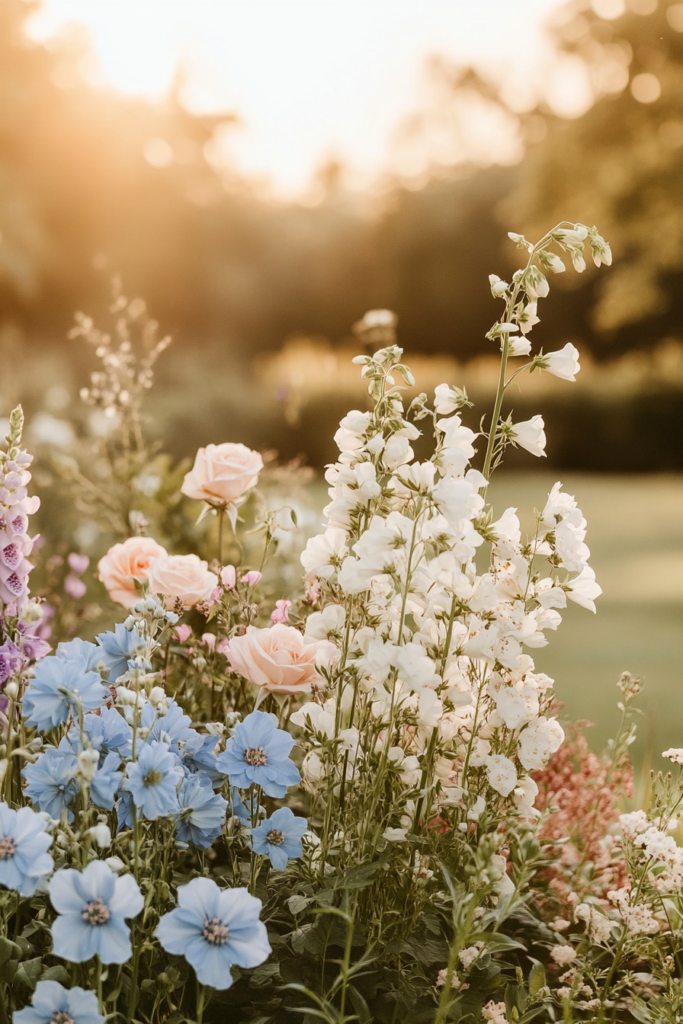
This enchanting image captures a soft, dreamy mix of light blue flax-like flowers, white bellflowers (Campanula), and pale pink roses, all bathed in a warm, ethereal golden light filtering through the background trees.
The planting works beautifully because the light pastel colors—the dusty blue, pale pink, and crisp white—naturally harmonize and feel incredibly gentle together. The tall bellflowers and roses provide vertical interest above the mounding blue flowers.
It has a deeply romantic, almost whimsical mood, intensified by the soft focus and warm light. It feels like a fleeting, perfect moment right out of a fairy tale.
To get this dreamy effect, plant flowers in soft blues, whites, and pale pinks, and try to capture them just as the sun is rising or setting to maximize that beautiful, soft glow.
Layered Orange and White Dahlia Border
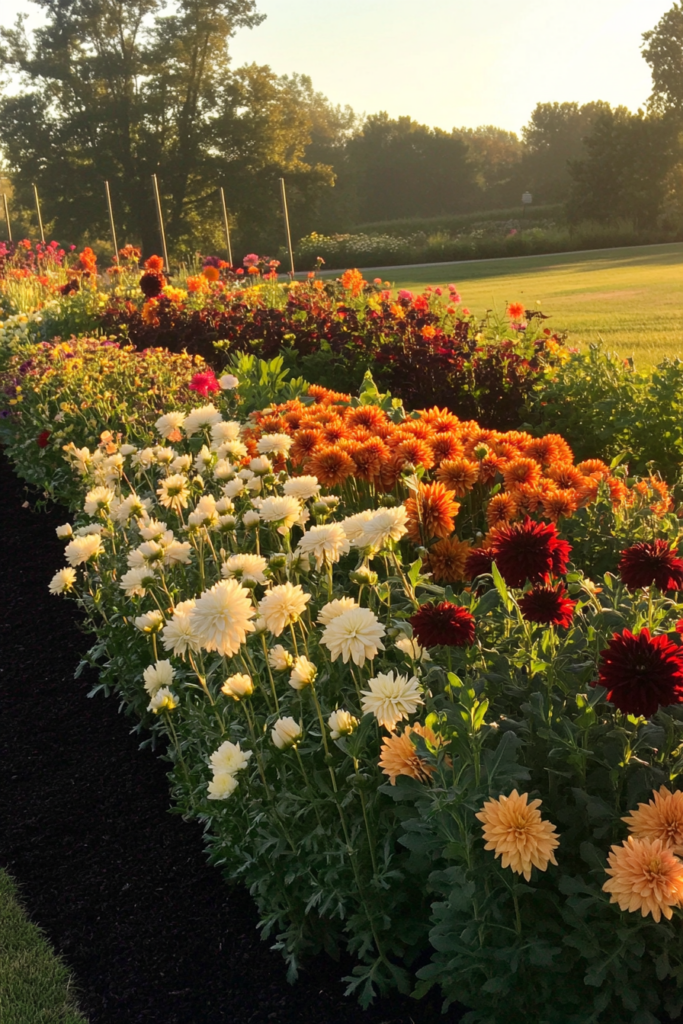
A meticulously planted border showcases rows of dahlias in an impressive gradient of color: from creamy white and pale apricot in the foreground, transitioning through bright orange, and culminating in deep burgundy-red dahlias at the back.
The design is incredibly effective because of the visual flow created by the clear color blocking and graduated height. The sheer volume of blooms and the neat, dense planting create a spectacular, abundant display that emphasizes the flower’s natural shape.
The mood is one of ordered abundance and rich, deep saturation—it feels productive, joyful, and completely breathtaking in its color execution. This is a purposeful cutting garden design.
When planting a large cutting bed, organize your flowers by height and color for maximum visual impact, using the tallest and darkest colors in the back to create depth.
Sunny Yellow and Fiery Red Focal Point
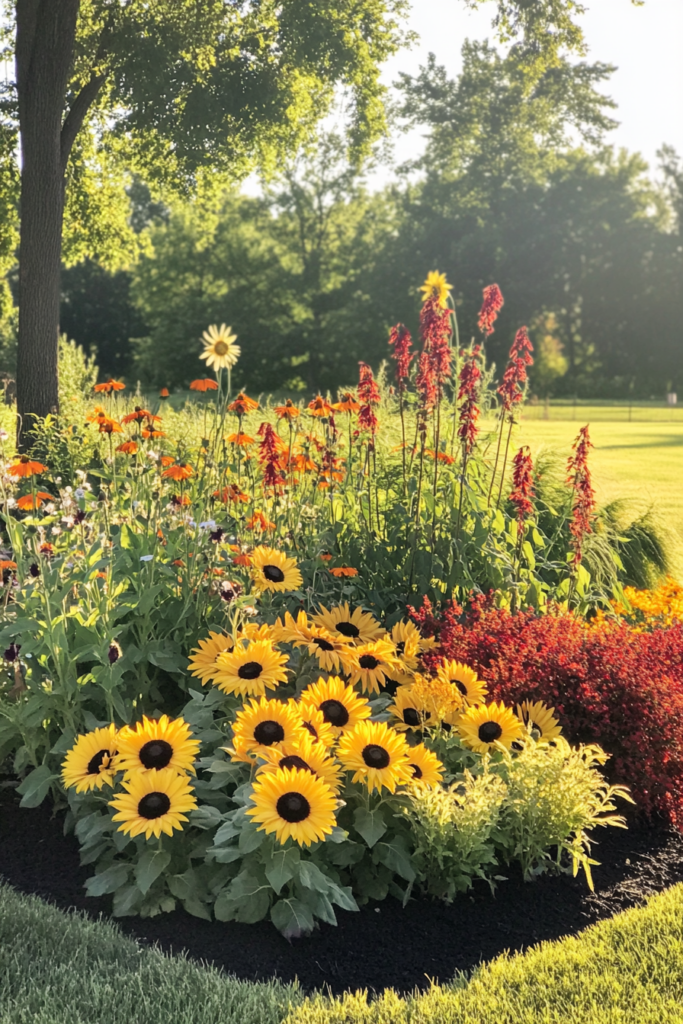
This image centers on a vibrant island bed dominated by a mass of sunny sunflowers in the foreground, complemented by striking, tall spikes of fiery red penstemon or Salvia. Shrubby red and lime green foliage anchors the whole arrangement.
The visual success comes from the powerful, bold contrast between the classic yellow sunflower heads and the vertical lines of intense red. The planting feels naturally abundant yet perfectly balanced with the surrounding deep green lawn and foliage.
It creates a feeling of robust, cheerful summer heat and energy—this garden is confident, bright, and an immediate mood booster that radiates pure, sunny happiness.
Use a classic, high-impact combination like yellow and red (or yellow and blue) for a feature bed, making sure to include one or two different vertical shapes to break up the mass of round blooms.
Peachy Cream and Warm Orange Roses
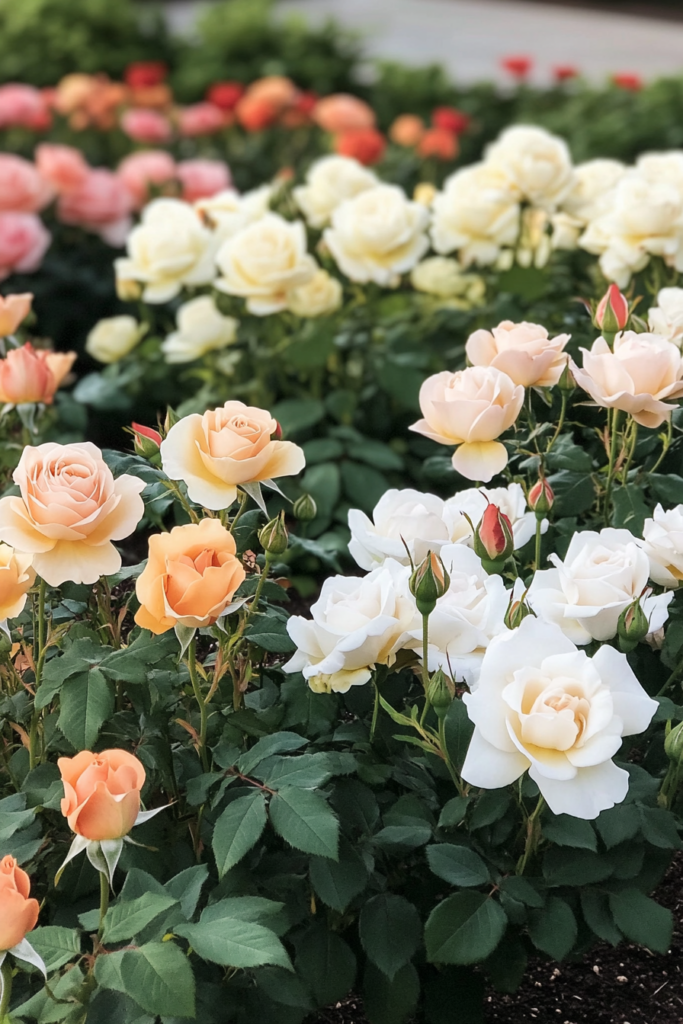
A dreamy bed filled with clusters of roses in warm, buttery tones—creamy white, pale peach, and soft apricot-orange—is captured here, showcasing the elegant, unfurling shape of the buds and blooms. The rich green foliage provides a deep contrast.
This planting is beautiful because the roses are grouped by color, creating soft, blended drifts that feel incredibly romantic and painterly. The subtle shift from pale cream to deeper orange adds dimension and warmth without being jarring.
It evokes a feeling of tender romance, sophisticated sweetness, and timeless elegance. This is the epitome of a fragrant, classic garden where you’d spend hours sipping tea.
For a luxurious rose garden, select varieties that fall within the same color family (like creams, apricots, and pale yellows) to ensure the overall look is cohesive and visually gentle.
Dark Dahlia and Orange Zinnia Pairing
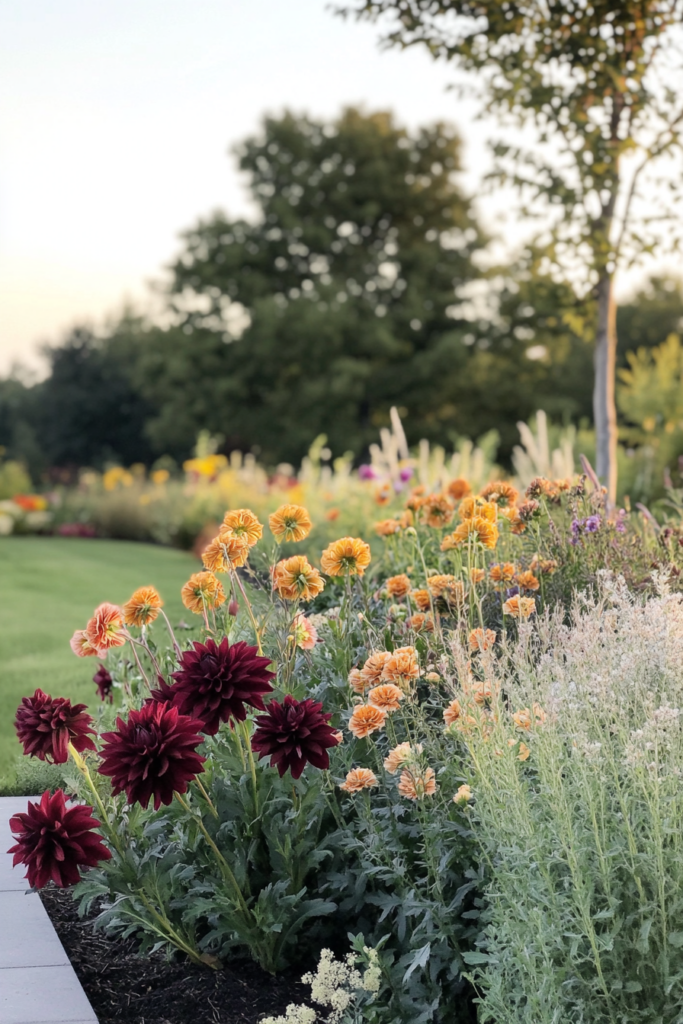
This beautiful border contrasts the deep, moody crimson of full, round dahlias with the bright, cheerful orange and soft peach tones of smaller, button-like zinnias. The foreground is softened by silvery-green foliage, adding a cool element to the warm colors.
The composition is compelling because the deep burgundy anchors the bright orange, making the warm tones appear even more luminous. The variation in height and flower size from the front to the back of the border creates excellent depth.
The atmosphere is one of sophisticated drama meeting playful exuberance—a balanced tension between deep, rich tones and dazzling, bright color that feels wonderfully complex.
A great tip for using dark blooms is to always pair them with a light or bright contrast, like a silvery leaf or a vibrant orange, to ensure they stand out and don’t get lost in the foliage.
White Calla Lily and Baby’s Breath Elegance
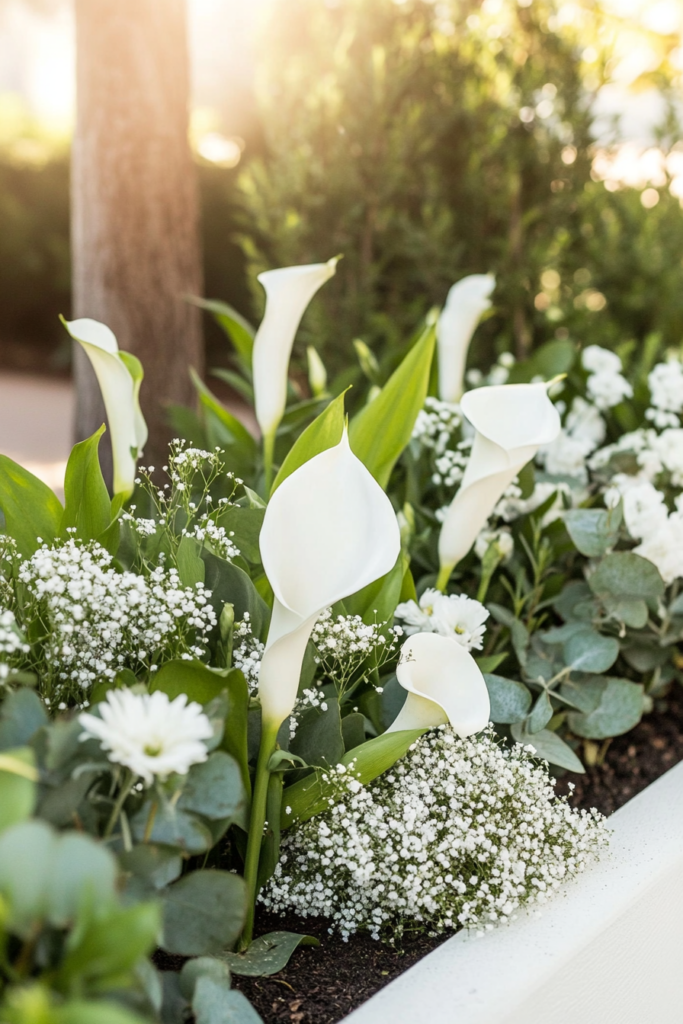
An elegant white planting features the sleek, sculptural curves of calla lilies rising gracefully from a cloud of tiny white filler flowers, like baby’s breath (Gypsophila), and soft, silvery-green eucalyptus-style foliage.
This bed is a triumph of form and texture, proving that a single color can be endlessly interesting. The strong, vertical lines of the calla lilies provide architectural structure, which is beautifully softened by the frothy, dense filler blooms at the base.
It creates an incredibly chic, formal, and pure atmosphere—it is the definition of understated luxury and quiet sophistication, perfect for a modern or minimalist garden space.
To achieve a clean, elegant look, choose flowers with strong, simple shapes (like calla lilies or gladiolus) and contrast them heavily with an airy, textural filler like baby’s breath or Queen Anne’s lace.
Multi-Hued Meadow of Sunflowers and Daisies
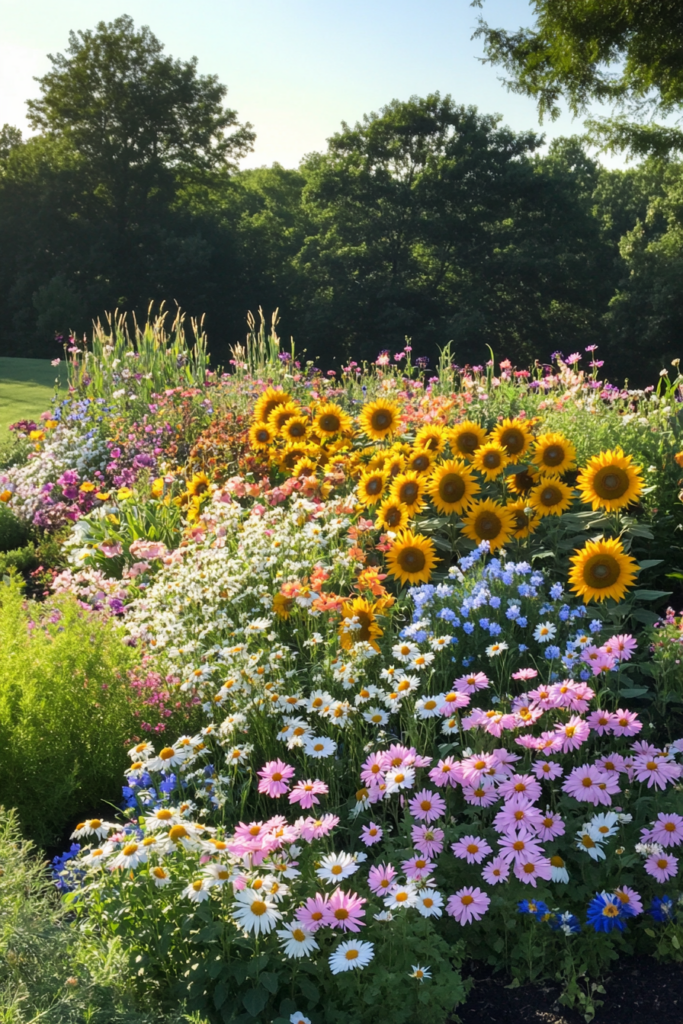
This sweeping view reveals a vast, colorful meadow dominated by a central mass of bright yellow sunflowers, framed by a lively mix of pink, white, and purple daisies and cornflowers in the foreground. It’s an explosion of summer color and life.
The visual impact is immense due to the sheer diversity and density of the flowers, which creates a textured tapestry of color across the landscape. The large, bold sunflowers act as the focal point, drawing the eye upward and through the planting.
This garden radiates pure, unbridled happiness and the lush wildness of high summer. It’s a joyful, energetic space that feels like it’s providing nectar for every bee and butterfly for miles.
When designing a large, colorful space, use bold blocks of a single color (like the sunflowers) to break up the busy mixed pattern and give the eye a place to rest.
Abundant Orange Poppy and Wildflower Curve
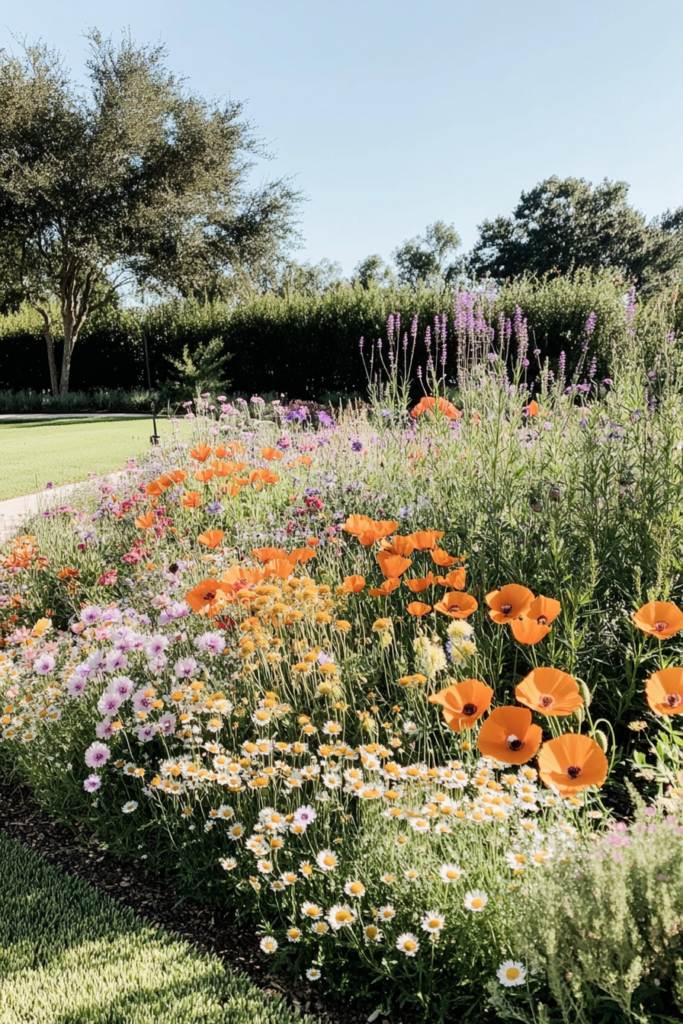
A lovely curved border sweeps across a lawn, filled with a profusion of bright orange poppies, sunny yellow daisies, and tiny purple and pink wildflowers. The planting mixes heights naturally, giving it a wonderfully unmanicured, soft look.
This composition is charming because it captures the best of a cottage garden aesthetic—abundant, free-flowing, and rich with varied textures and heights. The bright orange poppies pop beautifully against the softer, muted colors of the filler flowers.
It inspires a feeling of carefree nature and sun-drenched summer ease. The atmosphere is light, happy, and slightly whimsical, like stumbling upon a secret, perfect wildflower patch.
A great way to make a curved bed feel natural is to use mounding, low-growing plants at the edge and allow taller, airier flowers to grow and sway behind them.
Dark Burgundy and Blue Floral Arrangement
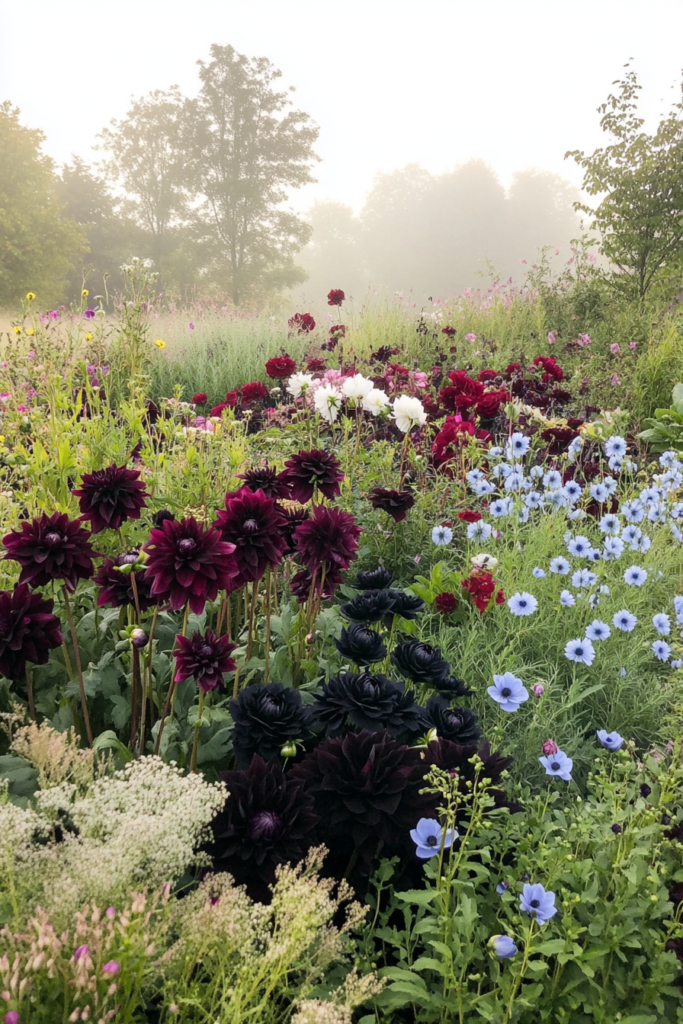
This dramatic, misty scene showcases a heavy planting of deep burgundy and almost black dahlias, interspersed with light, airy clusters of clear blue flowers. The misty, soft background adds a layer of depth and mystery to the scene.
The combination of the velvety, intense dark tones with the clear, cool blue is a brilliant use of complementary colors that heightens the dramatic contrast. The variation in bloom size, from the large dahlias to the small blue clusters, creates wonderful complexity.
It has a deeply romantic, moody, and almost gothic elegance. This garden feels atmospheric and intriguing, especially with the morning fog lending it a palpable sense of magic.
If your garden has natural moisture or fog, lean into dark, rich colors and ethereal shapes that are enhanced by a diffused, misty light, rather than washed out by harsh sun.
Mixed Purple and White Lavender Patch
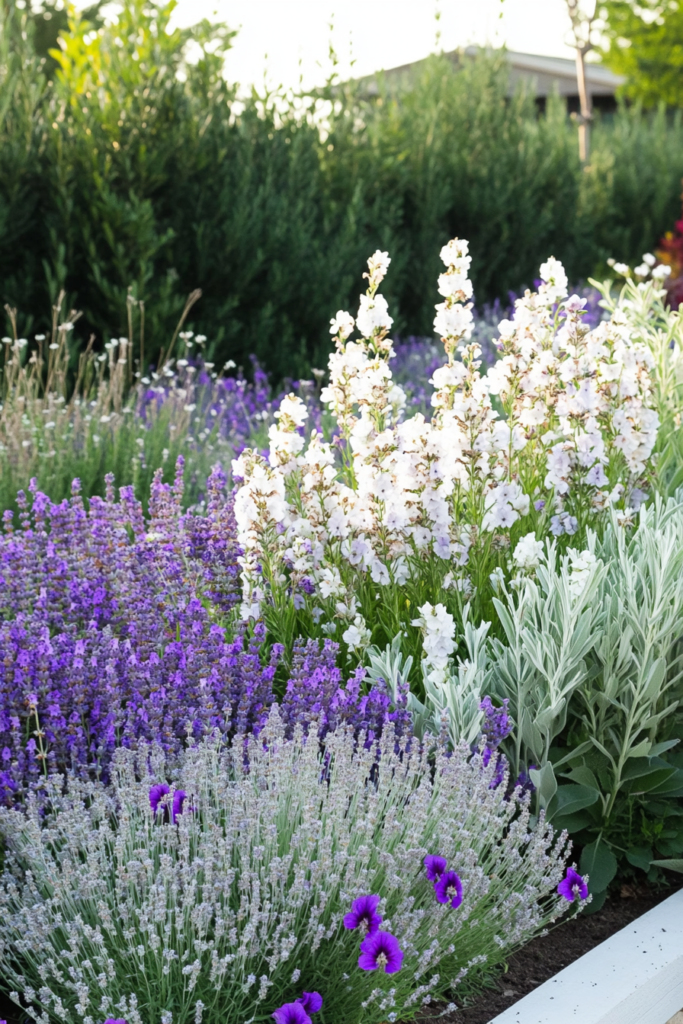
A vibrant, layered planting bed features three distinct sections: mounding, silvery-green lavender in the foreground, masses of bright purple lavender spikes next to it, and tall spikes of white flowers creating vertical accents.
This design is visually sophisticated because it demonstrates how to use the same plant (lavender) in different varieties and colors (purple, white, and silver foliage) to create a multi-textured, cohesive space. The white spikes break the horizontal line effectively.
It conveys a mood of clean, fragrant, and structured natural beauty. It’s an incredibly neat and calming garden area that feels instantly refined and well-cared for.
To make a monochromatic or single-plant bed more interesting, focus on introducing plants with strong contrast in foliage color (like silver versus deep green) and flower structure (mounding versus spiky).
Airy White and Pale Green Mix
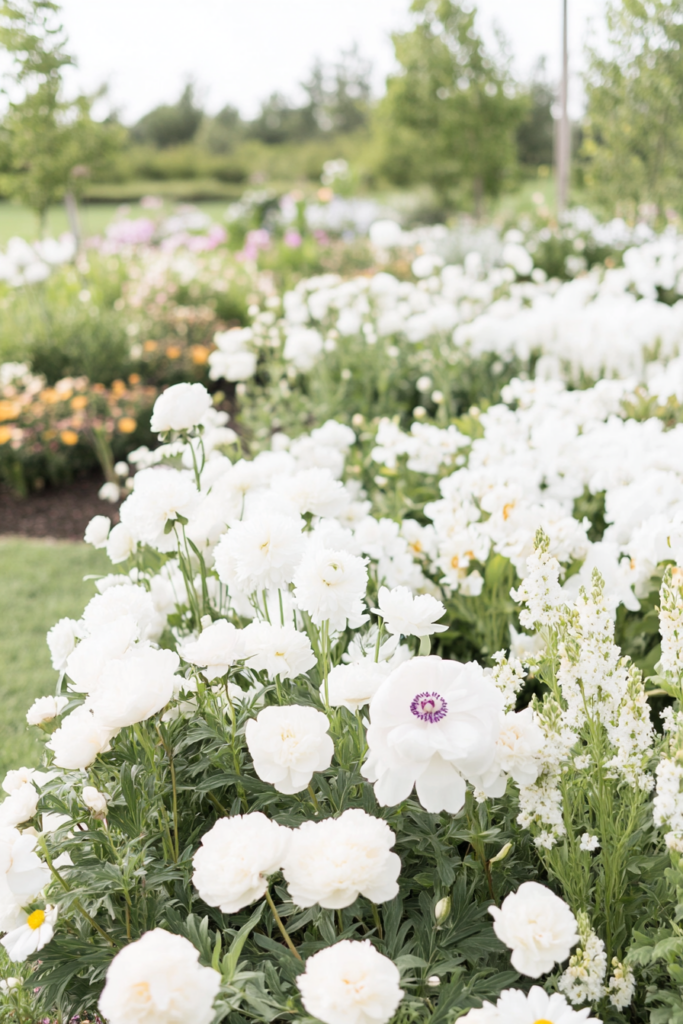
This bright, light-filled image is devoted entirely to an abundant mix of white flowers—fluffy, double-petaled blooms (like white ranunculus or Icelandic poppies), spiky white stock, and tiny white filler flowers.
The genius here is the exclusive use of white to create a serene, bright focal point. The textural variety, from the soft, rounded petals to the vertical spikes and feathery filler, ensures the white space feels complex and deeply textured rather than bland.
It creates a feeling of pure, crisp elegance and serenity, like fresh linen or a clear winter day. This garden feels peaceful, luminous, and beautifully structured.
To keep an all-white bed from looking flat, ensure you select flowers that offer a variety of forms: rounded, spiked, and airy/frothy.
Mixed Pink and Purple Wildflower Patch
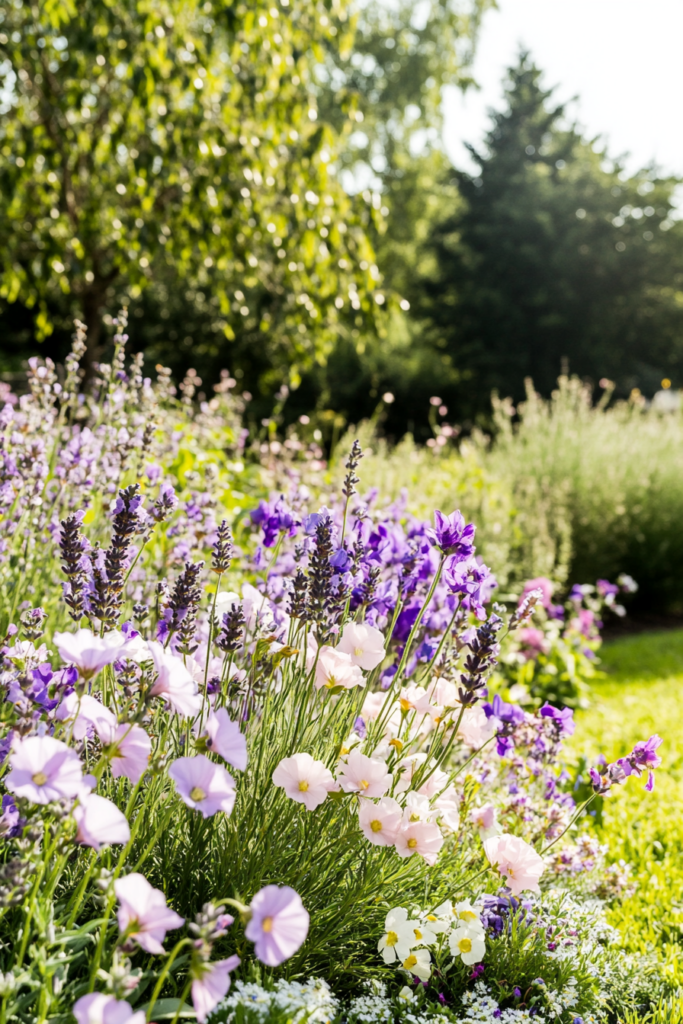
A charming cluster of pale pink cosmos-like flowers is nestled at the base of tall, spiky purple lavender, with smaller white and purple accents blending into the green grass. The planting feels natural and slightly wild.
This image highlights the simple beauty of pairing small, light-colored flowers with a taller, darker purple companion. The contrast in height and saturation makes both flower types feel more abundant and dynamic.
It evokes a whimsical, romantic, and slightly untamed energy, like a garden that has been allowed to flourish naturally with a gentle color scheme. It’s effortless and lovely.
When mixing annuals and perennials, plant the low-growing, airy annuals (like cosmos or Nigella) right at the front of the bed where their delicate colors can be appreciated against the backdrop of sturdier perennials.
Blush and Deep Burgundy Rose Display
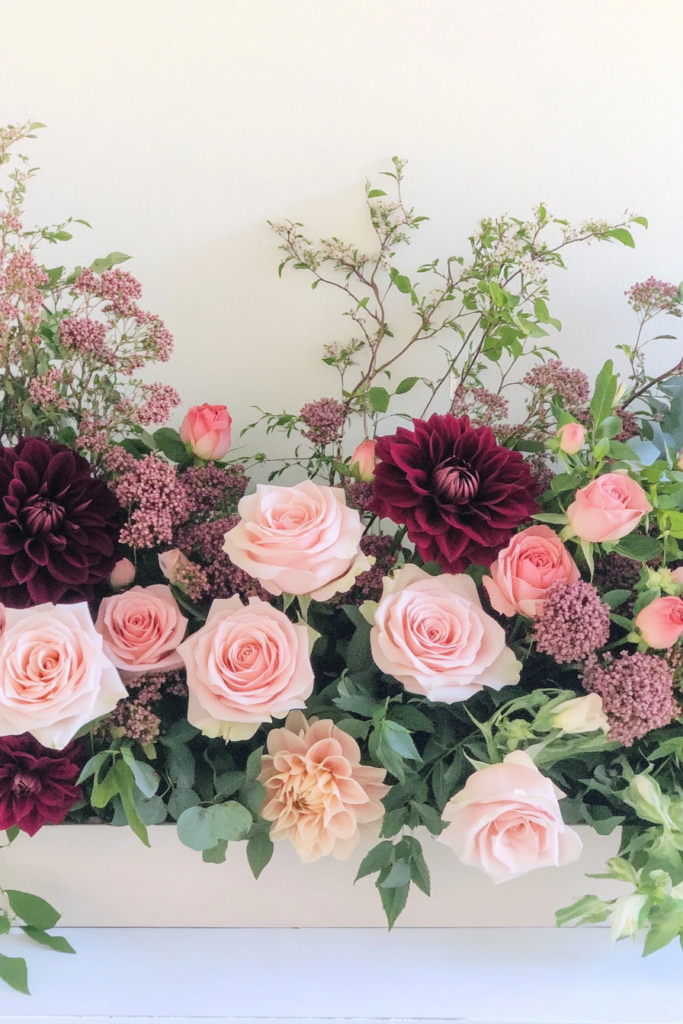
This close-up showcases a luxurious, formal arrangement of roses and dahlias in a magnificent color palette: soft, classic blush pink, contrasted powerfully with deep, moody burgundy blooms. Sprigs of light green foliage and tiny mauve filler flowers complete the look.
The combination of pale pink and deep wine red is a timeless classic that screams elegance and romance, amplified by the lush, dense arrangement of the blooms. The roses provide softness while the dark dahlias add necessary visual weight and depth.
It creates a mood of opulent, formal romance—it feels rich, deeply textural, and perfectly styled, like a flower installation ready for a grand event.
When making a cutting arrangement, always include some airy foliage or wilder sprigs (like the light green branches here) to give the formal blooms a touch of life and movement.
Sky Blue and White Midsummer Spires
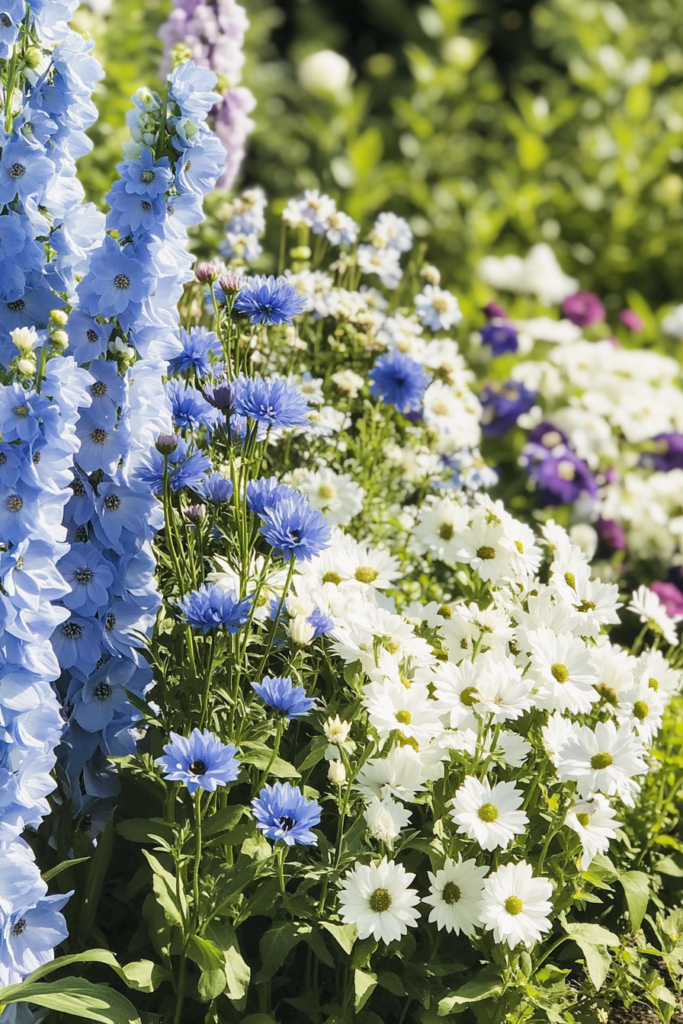
This enchanting close-up showcases towering spikes of light blue delphiniums standing high above a dense, cheerful layer of white shasta daisies, interspersed with tiny, rich blue cornflowers. The vertical structure and contrasting colors create a stunning, multi-level display, perfect for adding drama to the middle of a border.
The visual impact is rooted in the powerful pairing of complementary colors—the cool, clear blue and the crisp, clean white—which evokes a breezy, classic summer feeling. The differing flower forms, from the tall, elegant delphinium spires to the low, simple daisies, ensure the texture is just as captivating as the color.
It creates a mood that is incredibly fresh, vibrant, and classically beautiful, reminiscent of a perfect June day with bright sunshine and deep blue skies. This garden feels airy and beautifully balanced.
To achieve this height variation, always place your tallest spiky flowers, like delphiniums or foxglove, behind mounding fillers to give them center stage in the display.
Dark Red and Orange Zinnia Pathway
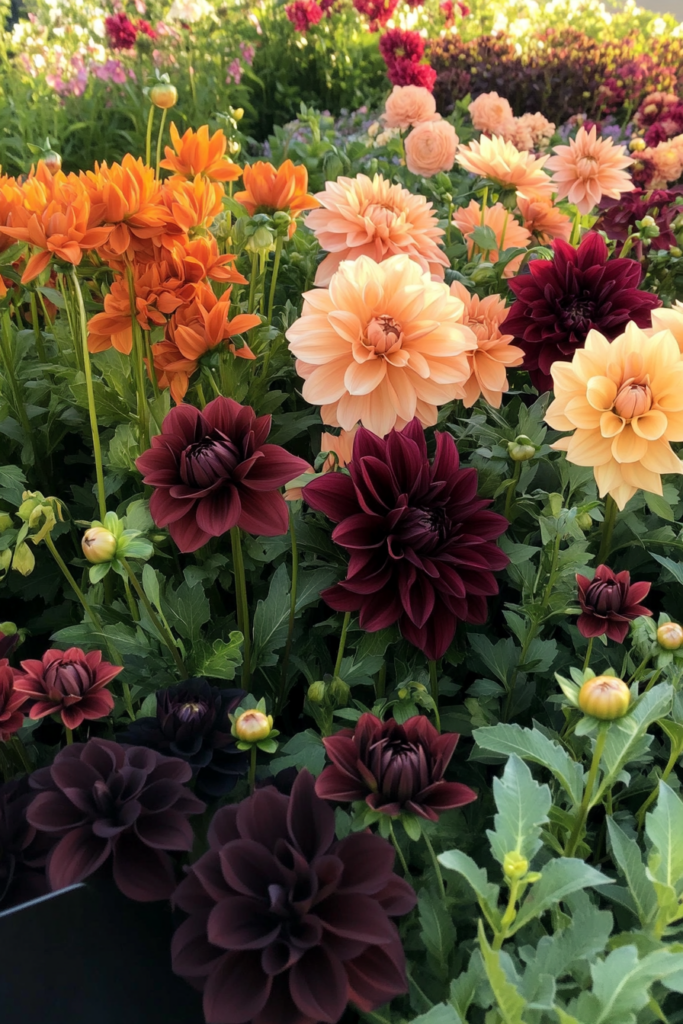
A dazzling array of dahlias (or large zinnias) in rich, warm shades—deep burgundy, vibrant orange, and pale apricot—are mass-planted to create a dense, colorful swath through the garden. The flowers vary in size and height, creating a beautiful depth of field.
This planting is successful because it uses a complex, yet entirely warm, color gradient, starting with the deepest tones in the foreground and moving into brighter oranges and yellows behind. This color layering makes the border feel incredibly lush and naturally abundant.
It evokes a mood of opulent, late-summer richness, feeling full of depth, velvet texture, and intense color saturation. This is a garden designed to produce the most dramatic and eye-catching bouquets.
For intense color density like this, don’t be afraid to plant dahlia or zinnia tubers close together and group varieties by their shade to create distinct, impactful blocks of graduated color.
I hope these gorgeous cut flower garden ideas have filled your head with color, texture, and so much inspiration! Seriously, don’t overthink it—whether you start with a single raised bed full of zinnias or dedicate a small border to a sweep of elegant white roses, every bloom you grow is a win. Just pick a color palette that makes your heart happy, get those bulbs and seeds in the ground, and enjoy the beautiful process of clipping your very own bouquets. Happy gardening, you deserve all the fresh flowers!
Start Growing Your Own Cut Flower Garden
• DIY Garden Ideas
• DIY Garden Projects Ideas
• DIY Garden Trellis Ideas
• Dollar Tree Garden Ideas