25+ Inspiring Chicken Coop and Garden Layout Ideas to Maximize Your Space

Creating a perfect space for your chickens and garden can be a fun and rewarding project! This collection features over 25+ creative layouts that harmonize both elements, making the most of your outdoor area while ensuring your feathered friends thrive. From cozy coops to flourishing plants, explore various designs that inspire functionality and beauty in your backyard.
Integrated Pest Management Strategies
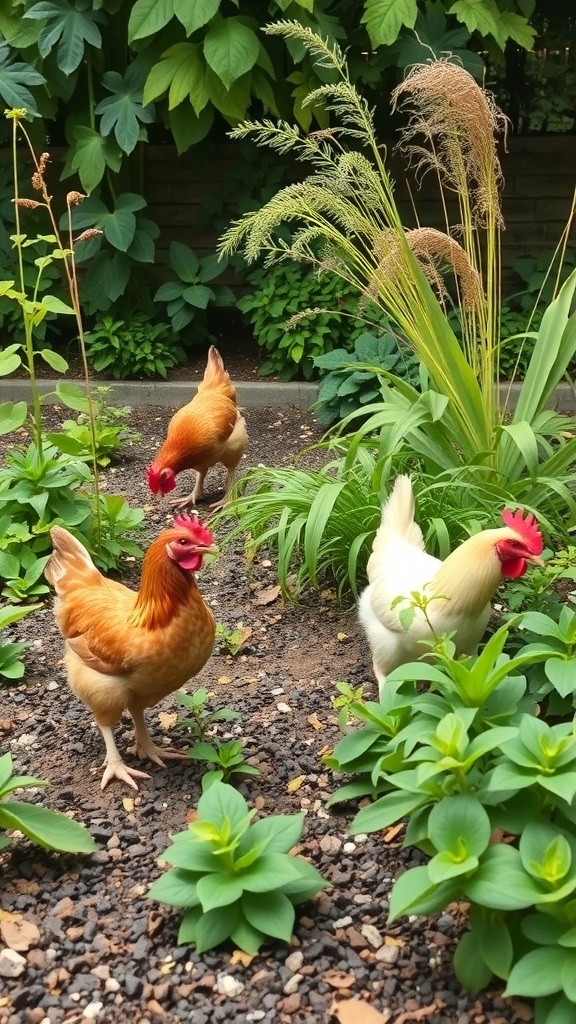
Incorporating chickens into your garden can be a smart move for pest management. The image shows chickens roaming freely among lush greenery, showcasing a harmonious relationship between livestock and plants.
Chickens are natural foragers. They love to scratch around in the soil, which helps control insect populations. This can reduce the need for chemical pesticides, making your garden healthier.
Planting a variety of flowers and herbs can also attract beneficial insects. These insects can help keep harmful pests in check. By creating a diverse ecosystem, you can enhance your garden’s resilience.
Another strategy is to use barriers like netting or fencing. This keeps chickens from damaging delicate plants while still allowing them to patrol the garden for pests. It’s a win-win situation!
Fencing and Safety Measures for Chickens
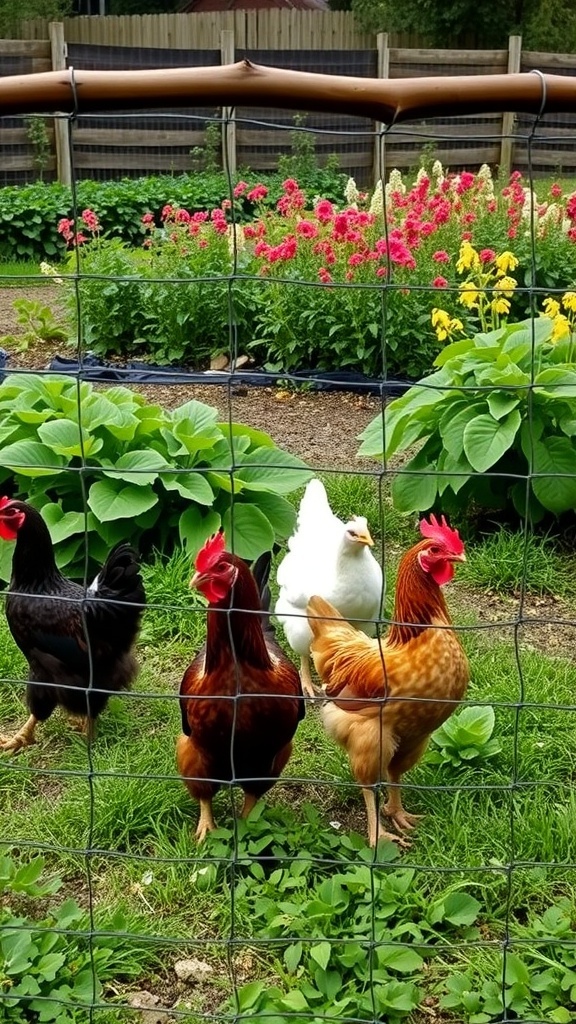
Creating a safe space for your chickens is key to keeping them happy and healthy. The image shows a vibrant garden with a sturdy fence, which is essential for protecting your flock. A good fence not only keeps chickens in but also keeps predators out.
Consider using a combination of wire mesh and wooden posts for durability. The fence should be tall enough to deter jumping and buried a few inches underground to prevent digging. This setup helps create a secure environment where chickens can roam freely.
Incorporating plants around the coop can provide shade and natural enrichment. Just make sure the plants are safe for chickens. Regularly check the fencing for any gaps or wear and tear. Keeping your chickens safe is a rewarding part of backyard farming!
Coop Ventilation and Sunlight Considerations
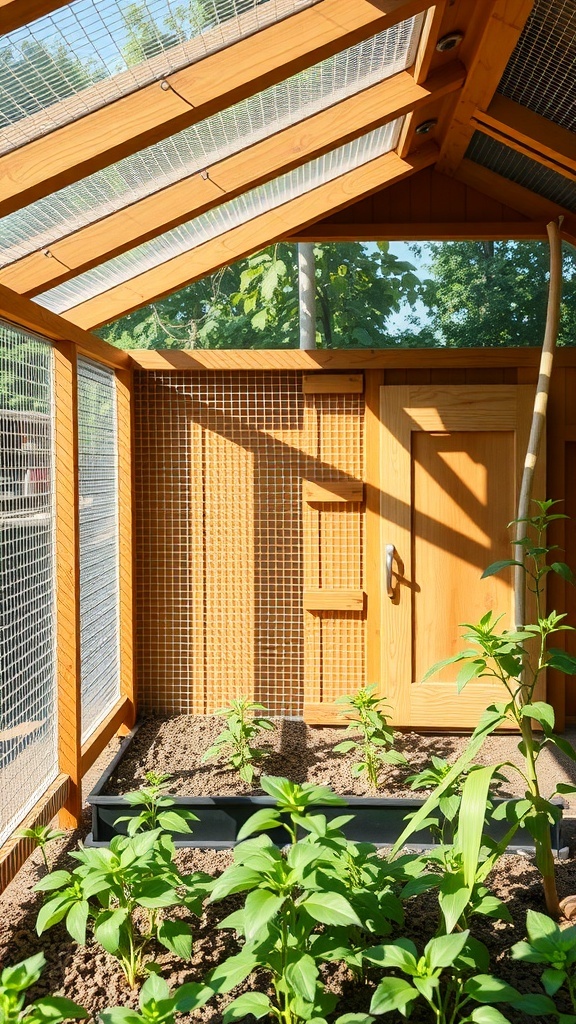
In this cozy chicken coop, you can see how important ventilation and sunlight are for the health of your flock. The design features a slanted roof with openings that allow fresh air to flow in while keeping out unwanted pests.
Natural light streams through the transparent panels, creating a bright environment for both chickens and plants. This setup not only keeps the coop airy but also helps regulate temperature, ensuring that your chickens stay comfortable throughout the day.
When planning your coop, think about where the sun rises and sets. Positioning the coop to capture morning sunlight can help warm it up early, which is especially beneficial in cooler months. Shade during the hottest part of the day can also prevent overheating.
Incorporating plants inside the coop can enhance air quality and provide a bit of greenery. Just make sure to choose non-toxic plants that are safe for your chickens.
Optimal Chicken Coop Placement
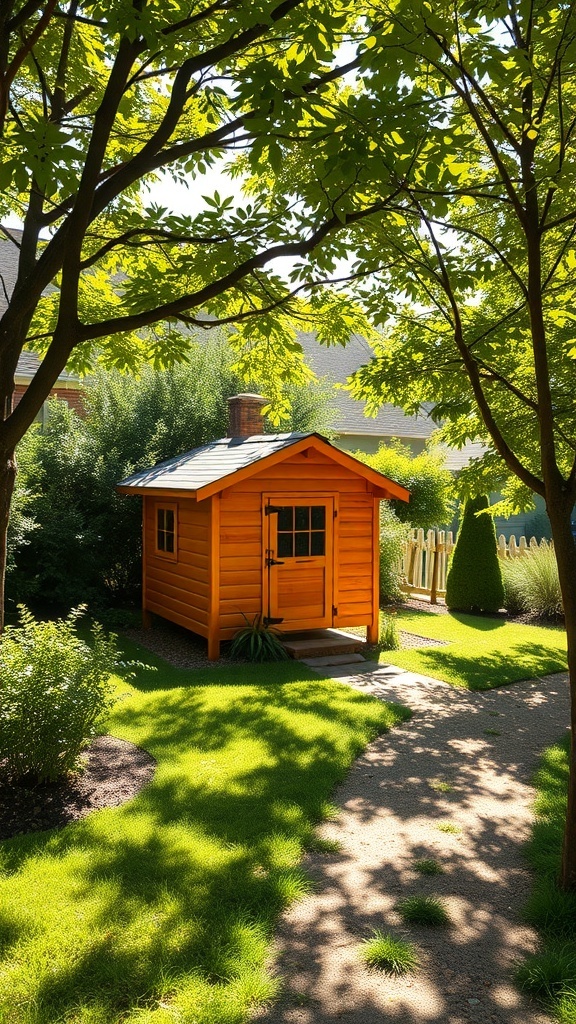
Choosing the right spot for your chicken coop is key to keeping your flock happy and healthy. The image shows a charming wooden coop nestled in a vibrant garden, surrounded by lush greenery. This setting highlights the importance of a peaceful environment for chickens.
First, think about sunlight. Chickens love the sun, but they also need shade to cool off. Placing the coop near trees, like in the image, offers a perfect balance. The trees provide shade during hot days and shelter from harsh weather.
Next, consider accessibility. The coop should be easy to reach for daily chores like feeding and cleaning. A clear path, as shown in the image, makes it simple to get to the coop without disturbing the chickens.
Lastly, think about safety. Ensure the coop is away from predators. A fenced yard, like the one in the background, can help keep your chickens safe while they roam and forage.
Seasonal Garden Planting for Chicken Nutrition
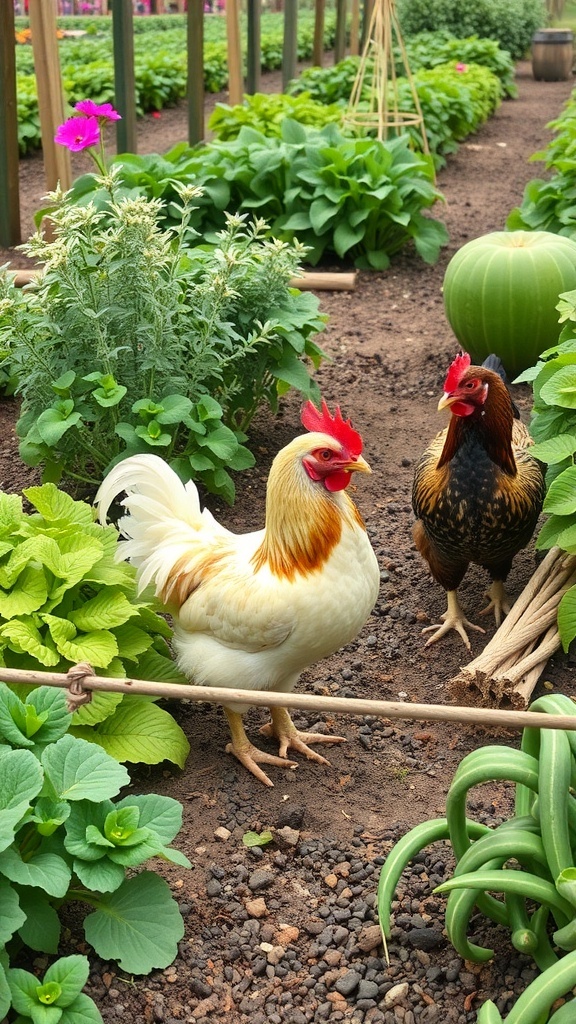
Creating a garden that benefits both you and your chickens is a great idea. The image shows two chickens roaming among lush green plants, highlighting how a well-planned garden can provide fresh food for your flock.
Seasonal planting is key. In spring, consider growing leafy greens like kale and spinach. These are nutritious and loved by chickens. As summer approaches, add sunflowers and squash, which not only provide food but also shade.
In fall, root vegetables like carrots and beets can be harvested for your chickens. They enjoy digging them up, making it a fun activity. Winter can be a bit tricky, but herbs like rosemary and thyme can thrive, offering flavor and nutrition.
By rotating your crops and planning for each season, you can ensure a steady supply of fresh greens and veggies for your chickens. This not only keeps them healthy but also adds variety to their diet.
Water Source Accessibility for Chickens
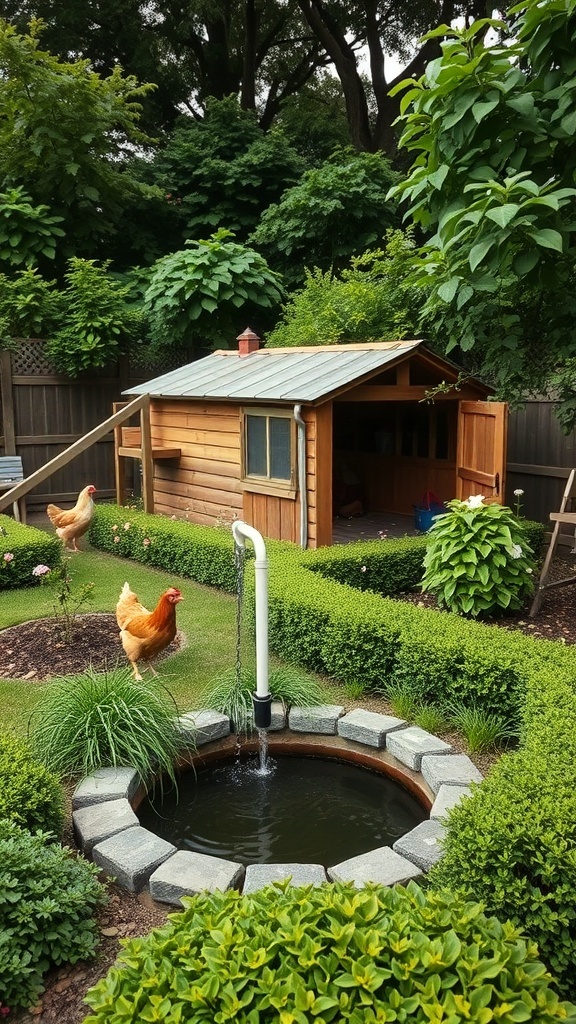
Having a reliable water source is key for keeping chickens healthy and happy. In the image, you can see a charming chicken coop surrounded by a well-maintained garden. The setup includes a water feature that not only adds beauty but also serves a practical purpose.
The water source is easily accessible, which is important for the chickens. Fresh water should be available at all times to keep them hydrated, especially during hot days. The design shown here makes it simple for the chickens to drink without any hassle.
Consider placing the water source near the coop and garden area. This way, the chickens can quench their thirst while enjoying their surroundings. Regularly checking and refilling the water is essential to prevent any health issues.
Incorporating a water feature can also help with the overall aesthetics of your garden. It creates a serene environment, making it enjoyable for both you and your feathered friends.
Free-Range Chicken Zones
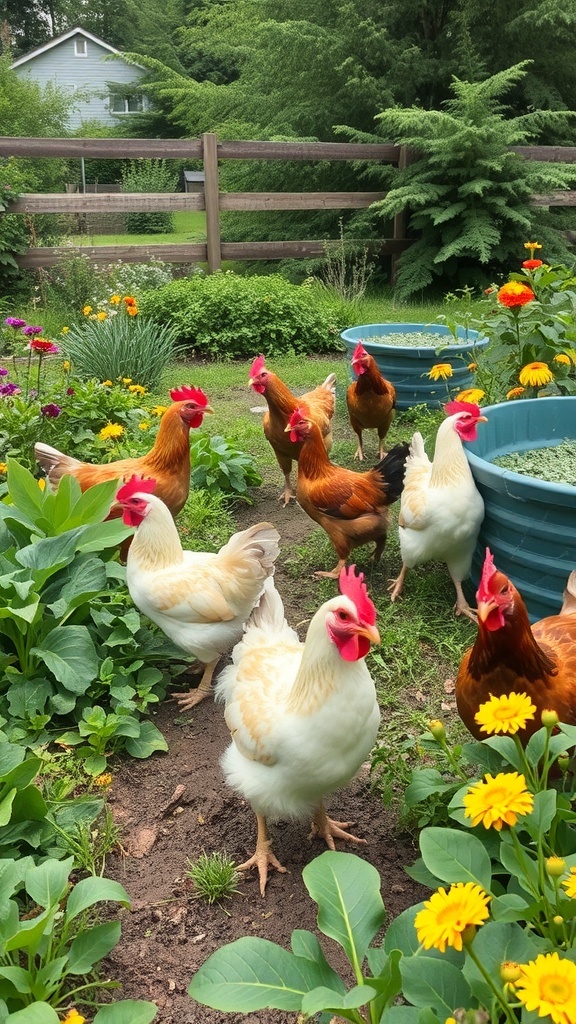
Creating free-range chicken zones in your garden can be a delightful way to enhance both your plants and your poultry’s happiness. In the image, you can see a vibrant garden filled with colorful flowers and healthy plants, where chickens roam freely. This setup not only allows the chickens to forage for insects and greens but also helps keep pests at bay.
When planning your free-range area, consider the layout carefully. Chickens love to scratch and peck, so having a mix of open spaces and shaded areas is ideal. You might want to include some low fences or natural barriers to guide them without restricting their movement too much.
Adding plants that are safe for chickens can also be beneficial. Herbs like basil and mint can thrive in these zones, providing both a treat for the birds and a natural pest deterrent. Plus, the flowers add beauty to your garden, making it a lovely spot for you to enjoy as well.
Remember, a well-designed free-range area can lead to healthier chickens and a more productive garden. It’s a win-win situation!
Garden Companion Plants for Chickens
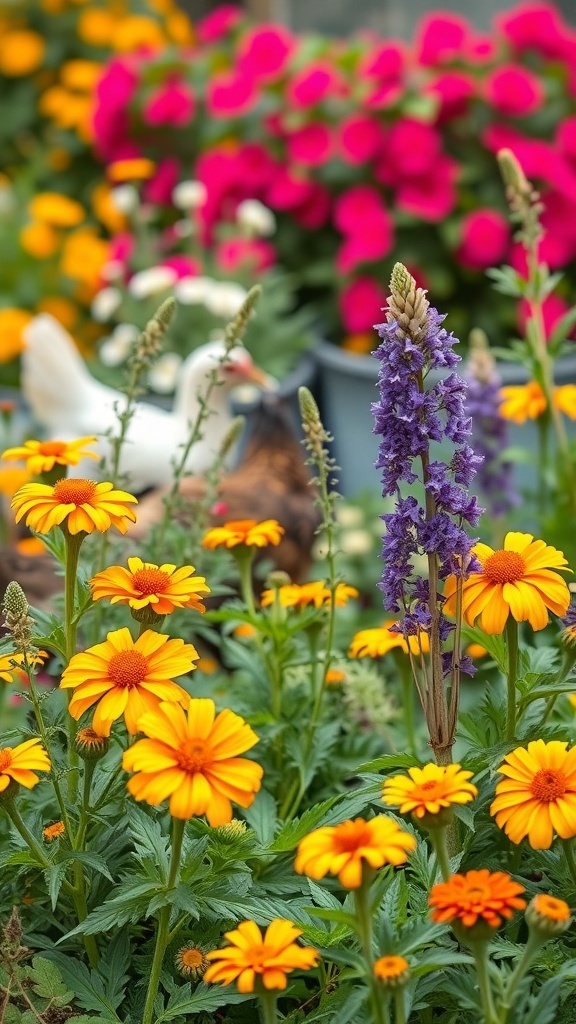
Creating a garden that works well with your chicken coop can be a fun and rewarding experience. The image shows a vibrant mix of flowers, including bright yellow and purple blooms, set against a backdrop of lush greenery. These colorful plants not only beautify the space but also serve practical purposes for your chickens.
Companion planting can enhance the health of your garden and provide benefits for your flock. For instance, marigolds are known to deter pests, keeping your chickens safe from harmful insects. Lavender can help calm your birds and attract pollinators, which is great for your garden’s ecosystem.
Consider planting herbs like basil and mint, which can provide natural remedies for your chickens while adding flavor to your meals. These plants can thrive alongside your chickens, creating a harmonious environment where both plants and birds can flourish.
Overall, a well-planned garden layout can make your chicken coop a lively and productive space. With the right companion plants, you can enjoy a beautiful garden while ensuring your chickens are happy and healthy.
Composting and Waste Management in Chicken Gardens
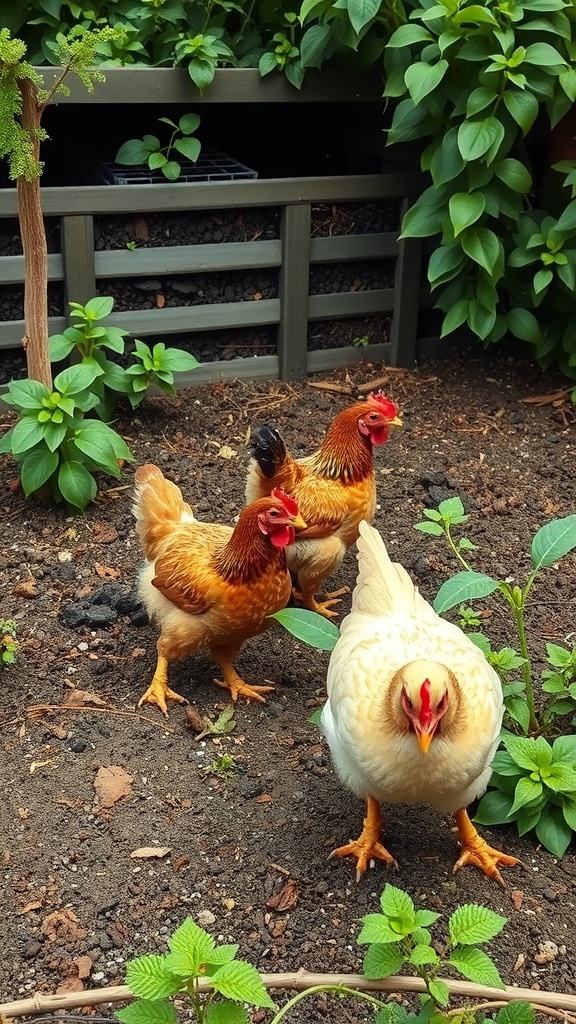
In a chicken garden, composting plays a key role in managing waste. Chickens produce plenty of droppings, which can be a great addition to your compost pile. This helps create nutrient-rich soil for your plants.
The image shows chickens roaming freely in a garden, surrounded by lush greenery. Their natural behavior contributes to the ecosystem by scratching the ground, which helps aerate the soil. This process also mixes organic matter into the soil, promoting healthy plant growth.
Setting up a compost bin nearby can make it easy to collect kitchen scraps and chicken waste. Layering these materials will speed up decomposition, turning waste into valuable compost. This not only reduces waste but also enriches your garden.
Remember to balance greens (like vegetable scraps) and browns (like dried leaves) in your compost. This balance is essential for effective composting. With a little effort, you can turn chicken waste into a powerful resource for your garden.
Herb Gardens for Chicken Health
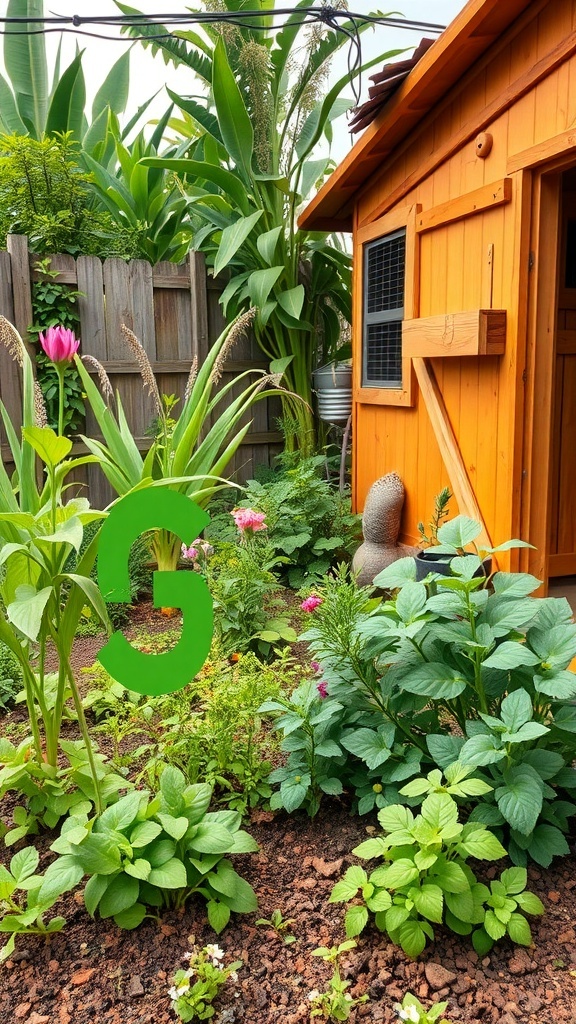
Creating a herb garden near your chicken coop can be a fantastic way to boost your flock’s health. Herbs like mint, oregano, and basil not only add flavor to your meals but also offer numerous benefits for chickens.
The image shows a vibrant garden with various herbs and flowers, which can provide a natural source of nutrients for your chickens. These plants can help with digestion and even deter pests.
Incorporating herbs into your chicken’s diet can enhance their immune systems and promote overall well-being. Plus, having a garden close to the coop makes it easy for you to gather fresh herbs whenever you need them.
Consider planting a mix of herbs that are known to be beneficial for chickens. This way, you create a beautiful and functional space that supports both your gardening and poultry-raising efforts.
Chicken Coop Aesthetics in the Garden
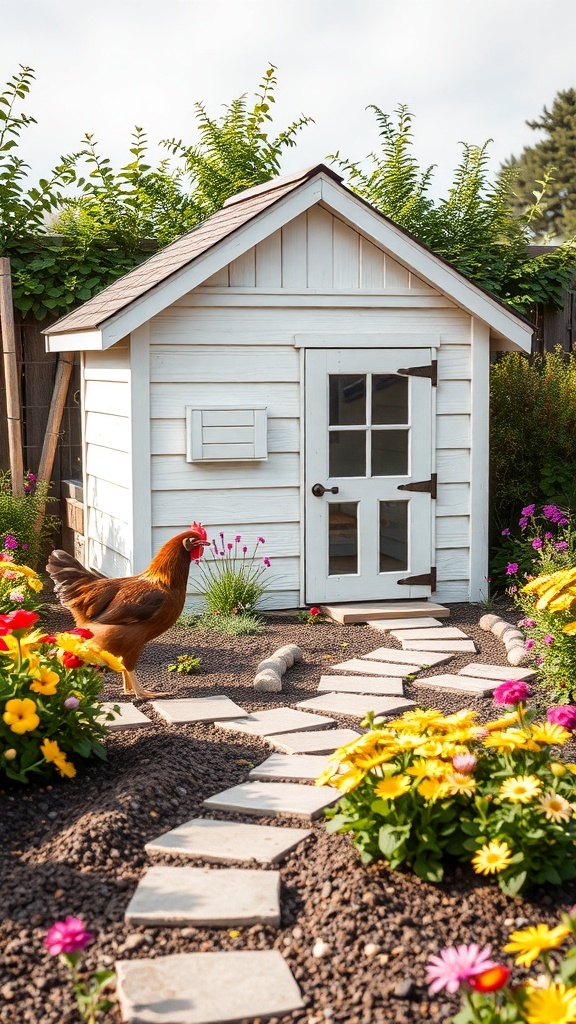
Creating a charming chicken coop can enhance your garden’s look. The coop in the image is a perfect example of how to blend functionality with beauty. Its clean lines and bright white paint make it a standout feature.
Surrounding the coop are vibrant flowers that add color and life to the space. This combination not only attracts attention but also provides a welcoming environment for both chickens and gardeners alike.
The pathway leading to the coop is lined with stones, giving it a rustic feel. This design choice invites visitors to stroll through the garden, enjoying the sights and sounds of nature. A well-placed coop can serve as a focal point, drawing the eye and enhancing the overall aesthetic of your outdoor area.
Incorporating plants around the coop can also provide shade and shelter for the chickens, making it a practical addition. This thoughtful layout shows how a chicken coop can be more than just a shelter; it can be a beautiful part of your garden.
Shade Solutions for Chickens in the Garden
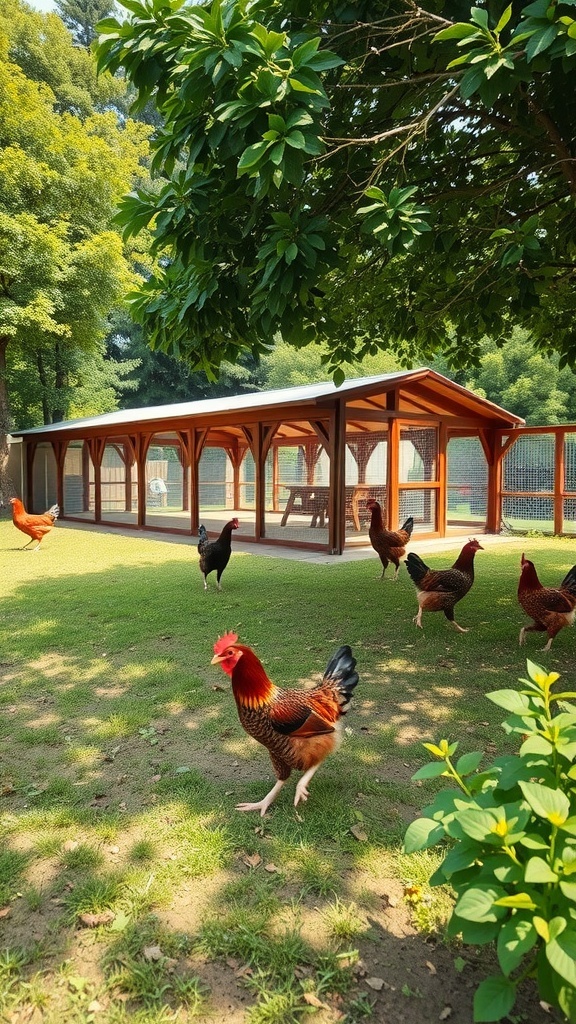
Creating a comfortable environment for your chickens is key, especially when it comes to shade. In the image, you can see a lovely chicken coop surrounded by greenery. The trees provide natural shade, which is essential for keeping chickens cool during hot days.
Consider planting trees or large shrubs around your coop. They not only offer shade but also create a more inviting space for your chickens to roam. The coop itself is designed with a covered area, which is another great way to protect your birds from the sun.
Using shade cloth can also be a smart choice. It’s lightweight and can be draped over the coop or run to block direct sunlight. This helps maintain a cooler temperature inside, making your chickens happier and healthier.
Don’t forget about water! Providing fresh water in shaded areas encourages your chickens to stay hydrated, especially when it’s warm outside. A well-planned garden layout with shade solutions will keep your flock thriving.
Using Raised Beds for Vegetable Gardening
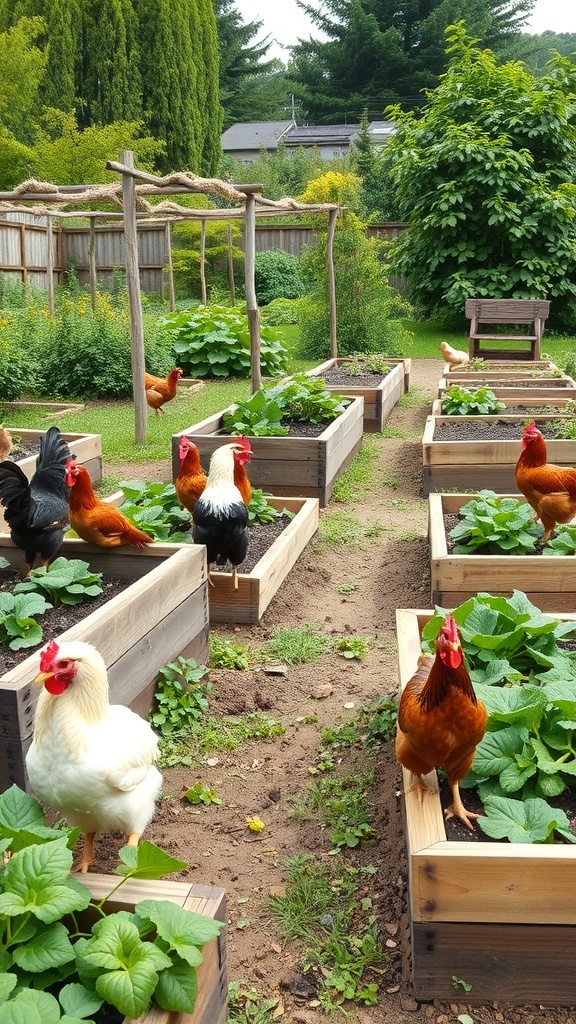
Raised beds are a fantastic way to grow vegetables while keeping things organized and accessible. The image shows a vibrant garden layout with wooden raised beds filled with lush green plants. Chickens roam freely among the beds, adding a lively touch to the scene.
These beds help with soil drainage and can be filled with high-quality soil, giving your plants the nutrients they need. The chickens can also contribute by providing natural pest control and enriching the soil with their droppings.
Incorporating raised beds in your garden layout not only maximizes space but also makes gardening easier on your back. You can plant a variety of vegetables, from leafy greens to root crops, all while enjoying the company of your feathered friends.
Consider adding pathways between the beds to make it easy to tend to your plants. This layout encourages a healthy ecosystem, where plants and animals coexist harmoniously.
Paths and Access Routes in Garden Layout
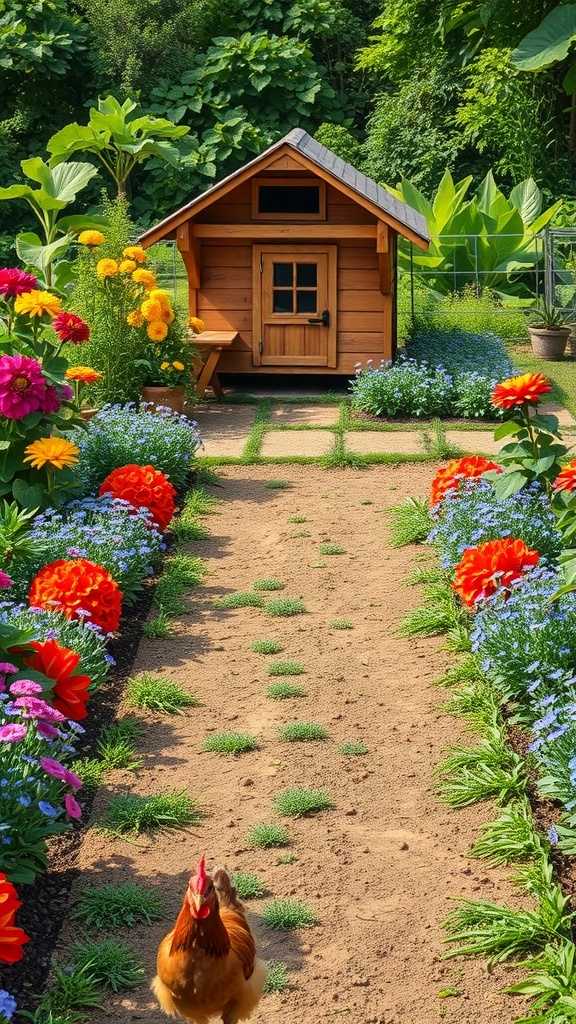
Creating paths in your garden is key for easy access and a pleasant stroll. The image shows a charming garden with a clear path leading to a cozy chicken coop. This setup not only looks inviting but also makes it simple to tend to your plants and chickens.
The vibrant flowers lining the path add color and life. They create a welcoming atmosphere that encourages you to explore. Using materials like gravel or stepping stones can help define the path and keep it tidy.
Consider the width of your paths. They should be wide enough for you to walk comfortably, especially if you’re carrying supplies. A well-planned route can connect different areas of your garden, making it functional and beautiful.
Don’t forget about access to your chicken coop! A direct path ensures you can easily reach your chickens for feeding and care. This layout promotes a harmonious relationship between your garden and your coop.
Sustainable Practices in Chicken and Garden Integration
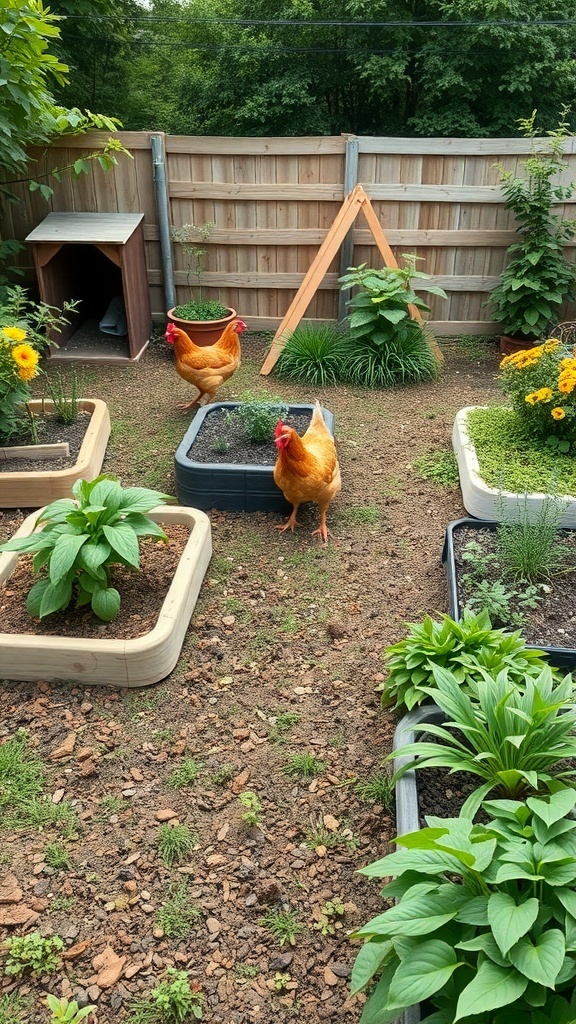
Integrating chickens into your garden can create a thriving ecosystem. The image shows a cozy setup where chickens roam freely among raised garden beds. This setup not only provides fresh eggs but also enriches the soil.
Chickens naturally fertilize the ground with their droppings, which can boost plant growth. They help control pests by eating insects and weeds, reducing the need for chemical pesticides. The raised beds are a great way to keep plants safe from the chickens while allowing them to enjoy the benefits of their presence.
Sunflowers and herbs in the garden add beauty and attract beneficial insects. The layout encourages a harmonious relationship between plants and animals, promoting sustainability. This method can lead to healthier plants and a more productive garden.